
0
£0.00
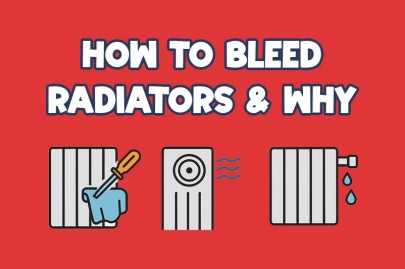
Bleeding your radiators releases trapped air from your central heating system. Air naturally builds up over time, but regular maintenance stops it from becoming a problem.
Quick Summary: Bleeding a radiator releases trapped air to restore heat efficiency. Do this when radiators feel cold at the top while the heating is on. Always switch the central heating system off and let it cool completely before starting to prevent scalding.
Trapped air in your central heating system causes several issues. If air pockets form, hot water cannot fill the entire radiator, which reduces the overall heat output.
Air moving through the system also creates noisy gurgling sounds. Left unchecked, this air build-up makes your heating inefficient, forcing your boiler to use more fuel to reach the desired temperature. Bleeding restores efficiency and lowers energy waste.
Before you bleed the system, confirm the problem and gather your tools.
Turn your heating on and set all radiator valves to maximum. This builds system pressure and pushes trapped air to the top of the units. Once the radiators warm up, carefully check each one.
Cold spots at the top indicate trapped air, particularly if other radiators in the house are perfectly hot.
| Symptom | Likely Cause | Recommended Action |
|---|---|---|
| Radiator cold at the top | Trapped air pockets | Bleed the radiator |
| Radiator cold at the bottom | Sludge or debris build-up | Power flush or replace radiator |
| Noisy, gurgling system | Air moving through pipes | Bleed all radiators |
| Boiler pressure drops | Recent bleeding / System leak | Top up via filling loop |
After closing the bleed valves, check your boiler's pressure gauge. Releasing air often causes system pressure to drop.
The gauge should read between 1 and 1.5 bar when cold. If it drops below this, re-pressurise the boiler using the filling loop. Consult the boiler manual for specific instructions, or call our team for help.
Once the pressure is correct, turn the heating back on and check the radiators again. They should now be consistently warm from top to bottom.
If you repeatedly need to bleed the same radiator, or if it remains cold, you may have a larger issue like a system leak, a faulty pump, or internal sludge. At this stage, consult a Gas Safe engineer.
If you find yourself needing to bleed the same radiator repeatedly, it may be a sign that the radiator itself needs replacing. Browse our full range of radiators to find an upgrade that suits your home.

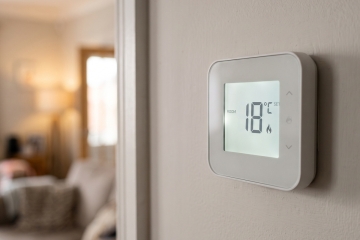
What temperature should your home be? Find out how a cold house may affect your health, who is most at risk and when to put the heating on.
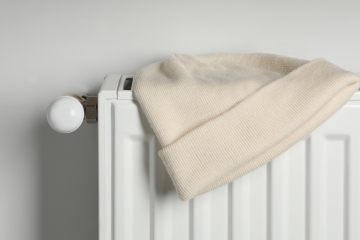
The amount of energy your home needs will depend on the property, the heating system, how well the house holds heat and how often each room is being used. A heating schedule that works for one household might be completely wrong for another.
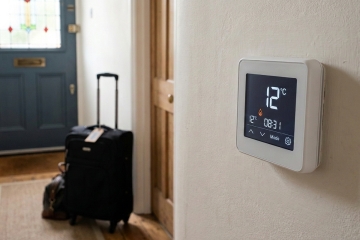
If you're going away during colder weather, leave the heating system powered and turn the thermostat down rather than switching the boiler off completely.
By signing up I agree to receive HeatandPlumb.com emails and to the privacy policy. I can also unsubscribe at any time