
0
£0.00
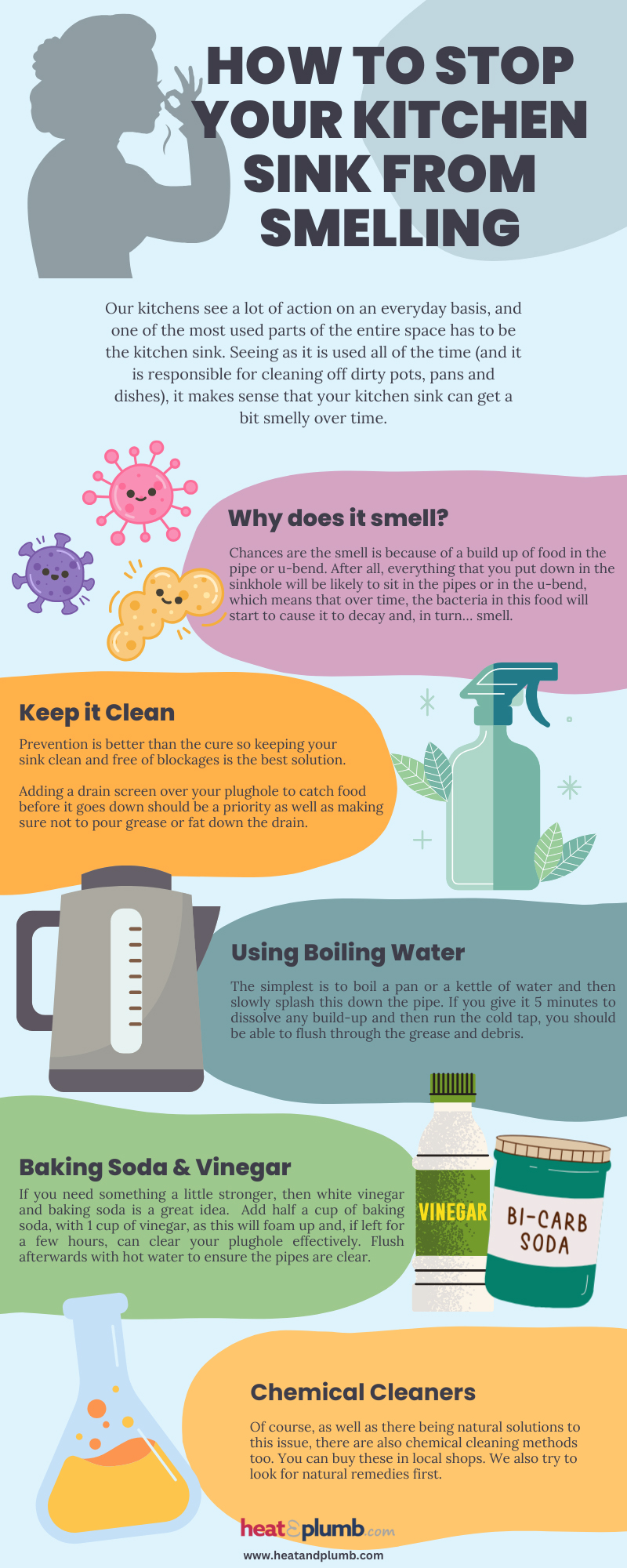
Our kitchens see a lot of action on an everyday basis, and one of the most used parts of the entire space has to be the kitchen sink. Seeing as it is used all of the time (and it is responsible for cleaning off dirty pots, pans and dishes), it makes sense that your kitchen sink can get a bit smelly over time.
The good news is that you don't have to just put up with the smell. With this article we can help you learn more about why it happens, how you can treat it AND prevent it from happening in the future.
Wondering why your sink smells the way it does? There are two main reasons for this; the first is a build-up of food in the drainpipe. After all, everything that you put down in the sinkhole will be likely to sit in the pipes or in the u-bend, which means that over time, the bacteria in this food will start to cause it to decay and, in turn - smell.
Another reason your kitchen drain may smell is that the smell is coming from the sewer itself. This usually happens because your u-bend is blocked, stopping water from sitting in the u-bend.
There are several ways that you can try to get rid of the smell that comes from the drains and here are
The simplest is to boil a pan or a kettle of water and then slowly splash this down the pipe. If you give it 5 minutes to dissolve any build-up and then run the cold tap, you should be able to flush through the grease and debris.
If you need something a little stronger, then white vinegar might be a great idea. You only need to pour a small amount of white vinegar down the plughole and then let it stand for 30 minutes. This should be rinsed with hot water. You could also add half a cup of baking soda, with 1 cup of vinegar, as this will foam up and, if left for a few hours, can clear your plughole effectively.
Of course, as well as there being natural solutions to this issue, there are also chemical cleaning methods too. You can buy these in local shops, although we always recommend looking for a natural solution first.
If you have worked hard to clean your drains and get rid of the smell, then you probably won't want it to happen again. However, there are ways to prevent drain odour. This includes adding a basket strainer over your plughole to catch food before it goes down. Regular cleaning of this and of course your sink will also help any future issues.
You should also avoid pouring any fat or grease down the drain as this can quickly build up. It is also a good idea to pour leftover boiled water down your plughole regularly as this can kill off any bacteria and stop the smell from developing.
You don't have to live with a stinky drain. You just need to find a way to stop the smell and stop it from happening again and leaving your kitchen smelling as clean as it looks. Our handy infographic below offers you a quick visual guide to help with any of the issues mentioned above.

Learn about shower tray waste types, sizes, traps and flow rates, with practical advice on choosing a compatible replacement.
Learn how cable and pneumatic toilet flush buttons work, how to identify your mechanism and what to check before buying a replacement.
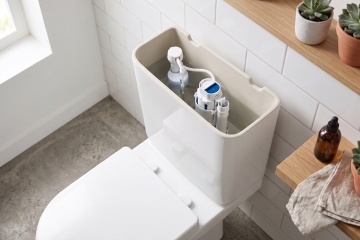
If your toilet will not flush properly, the cause is usually either inside the cistern, around the flush mechanism or further along the waste pipe. The key is to work out whether the flush is weak, not working at all, or backing up into the pan.

By signing up I agree to receive HeatandPlumb.com emails and to the privacy policy. I can also unsubscribe at any time