
0
£0.00
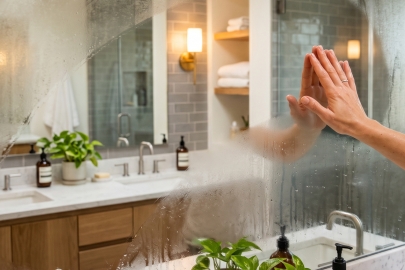
A steamed-up mirror straight after a bath or shower is one of the most common bathroom complaints, and one of the easiest to fix once you know what is causing it. Hot water vapour hits the cooler surface of the glass and condenses into the fine mist that fogs the reflection. Some fixes cost nothing, like opening a window. Others, like a heated demister mirror, solve the problem for good. Most bathrooms work best with a combination of both.
Warm, moist air from a bath or shower rises and spreads through the room. When it reaches a surface colder than itself, the water vapour condenses back into liquid. Mirrors fog particularly quickly because glass cools faster than most other bathroom surfaces, and it sits directly in the path of rising steam. A bathroom with poor ventilation holds onto that moisture for longer, so the fogging gets worse the longer a shower runs.
Ventilation is the single biggest factor in how much condensation ends up on your mirror. Opening a window during or immediately after a shower gives moisture somewhere to escape instead of settling on cold surfaces, and it is worth doing whenever the weather allows it.
An extractor fan matters more, particularly in bathrooms without a window, where UK Building Regulations Part F require mechanical ventilation. A fan positioned close to the shower or bath pulls steam away at the source before it has a chance to spread across the room. Fans with a humidity sensor or timer are worth considering, since they keep running for a set period after you leave, so residual moisture keeps clearing even once the light is off. An extractor fan matters more, particularly in bathrooms without a window, where UK Building Regulations Part F require mechanical ventilation. For more detail on choosing and positioning one, see our guide on how to ventilate your bathroom.
Wiping the mirror, tiles and any glass shower screen dry after use takes a moment and makes a real difference, particularly in a bathroom used by more than one person throughout the day. On its own it will not eliminate condensation, though it does reduce the buildup that leads to mould around frames, sealant and grout over time.
A demister mirror uses a thin heating element behind the glass to keep the surface a few degrees warmer than the surrounding air. Warm glass cannot hold condensation the way cold glass does, so the mirror stays clear right through a shower instead of fogging up and slowly clearing afterwards. Our illuminated bathroom mirrors range includes several with built-in demister pads, alongside features like shaver sockets and adjustable lighting.
If you already have a mirror you want to keep, a standalone demister pad can be fitted to the back of most flat mirrors for the same steam-free result, no new mirror required. Browse the full bathroom mirror range to compare styles, sizes and finishes.
Dehumidifiers pull moisture from the air and store it in a tank. They do the job well, but cost more upfront than an extractor fan. They suit a short-term situation best, such as a bathroom with no ventilation while other work gets sorted, rather than standing in as a permanent fix. For most bathrooms, sorting ventilation and fitting a demister mirror solves the problem for less money.
It helps, but a fan takes a few minutes to clear the air, so the mirror can still fog during that time. Pairing ventilation with a heated mirror gives a faster result, since the mirror stays clear while the rest of the room is still catching up.
Only on the mirror itself. The rest of the room still holds moisture, so a heated mirror works best paired with decent ventilation rather than replacing it.
Yes. The heating element works the same way in both, so the result is identical, just fitted to a mirror you already own.


A small bathroom does not automatically require expensive fittings or extensive building work. Good planning makes a surprisingly compact room highly workable. Look honestly at what the space can actually take before choosing fittings, and you avoid costly mistakes later.
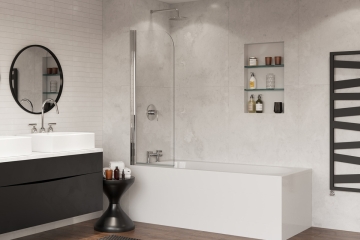
Bath screens collect water marks, soap residue and limescale quickly because they sit directly in the splash zone above the bath. Cleaning the glass, seals and moving parts regularly helps reduce staining, keeps the screen easier to maintain and lowers the chance of water escaping around worn or dirty seals.

Double sink vanities devour space, cost considerably more, and often create problems they're supposed to solve. Single sinks aren't just budget compromises; in many bathrooms they're genuinely the smarter choice. Here's why the obvious answer isn't always right.

By signing up I agree to receive HeatandPlumb.com emails and to the privacy policy. I can also unsubscribe at any time