
0
£0.00

Choosing between bifold and sliding shower doors seems straightforward until you start comparing them properly - that's when you realise each has distinct advantages and compromises that suit different situations.
Both solve the same basic problem - providing shower access in limited space - but they do it differently with varying degrees of success depending on your specific bathroom layout. Let's take a look at what might actually work for you.
Bifold doors consist of multiple glass panels hinged together that fold inward like an accordion when opened. Typically you've got two or three panels that collapse against each other, creating a compact folded stack that takes minimal space.
The panels slide along a track whilst simultaneously folding, combining sliding and folding motion in one opening action. This dual mechanism is more complex than simple sliding but allows doors to open in confined spaces where swing doors won't fit.
Sliding doors operate on tracks with panels that slide horizontally past each other, overlapping when closed. They're mechanically simpler with just linear sliding motion and no folding components involved in the mechanism.
Most sliding shower doors use two or three panels depending on enclosure width, with at least one fixed panel and one or two sliding panels that move along top and bottom tracks.
Bifold doors excel in extremely tight spaces where even sliding doors struggle to provide adequate opening width. The folding mechanism creates wider access from narrower door widths by collapsing panels inward rather than requiring them to slide past each other.
A 700mm bifold door can open to provide 500-550mm clear access, whilst a 700mm sliding door only offers about 350mm because one panel must remain in place for structural stability. This difference matters enormously in compact ensuites or awkward bathroom layouts.
The doors open inward into the shower space, so you need the shower tray to be deep enough to accommodate folded doors without them interfering with shower use. Minimum 800mm depth works, though 900mm+ is more comfortable.
Sliding doors need no depth inside the shower - they slide along the enclosure front - but they require adequate width to slide panels past each other. Very narrow enclosures (under 800mm) struggle with sliding mechanisms that don't leave sufficient opening.
Sliding doors are mechanically simpler and typically operate more smoothly with less potential for mechanism problems. Push the door and it slides - straightforward interaction that even children manage easily.
The sliding action requires minimal effort when tracks are clean and rollers function properly. Poor quality sliding doors bind and stick, but decent mechanisms operate smoothly for years with basic maintenance.
Bifold doors involve more complex motion combining sliding and folding that requires slightly more coordination. Users need to guide the panels through their folding sequence rather than just pushing straight across.
Quality bifold mechanisms operate smoothly once you understand the motion, but cheap versions feel awkward and require excessive force. The additional mechanical complexity means more potential failure points if components are inadequate.
This is where both mechanisms face challenges compared to hinged or pivot doors that seal more effectively when closed.
Sliding doors have overlapping panels that create potential leak points where panels meet. Water can escape through the overlap if the magnetic strips or seals don't maintain contact, particularly with older or poorly maintained doors.
The bottom track collects water that drains back into the tray through small holes, but this system can clog with soap scum and hair, causing water to overflow onto bathroom floors. Regular track cleaning prevents this but adds maintenance requirements.
Bifold doors typically seal better than sliding doors because the folded panels compress against seals when closed, creating tighter contact. However, the multiple hinges and joints create numerous potential leak points if seals deteriorate.
Both types require more careful showering technique than fully enclosed doors. Direct spray toward doors causes more escape than with hinged alternatives that seal completely when closed.
Sliding door tracks are notoriously difficult to clean thoroughly. The channels accumulate soap scum, hair, and mineral deposits that require scrubbing with brushes to remove properly.
The bottom track particularly harbours grime because water collects there between uses. You're looking at weekly cleaning if you want tracks staying genuinely clean, monthly if you'll tolerate visible buildup.
Bifold doors have less problematic tracks because water doesn't pool the same way, but the multiple hinges and joints collect limescale and soap scum that's fiddly to clean. Each hinge point needs attention with a brush or cloth to prevent buildup.
Both mechanisms have more components than simple hinged doors, meaning more areas requiring cleaning attention. Glass panels themselves clean identically regardless of mechanism - it's the hardware that creates maintenance differences.
Sliding doors with quality rollers and tracks last 10-15 years typically before mechanisms wear enough to need replacement. Cheap rollers fail within 5-7 years, causing binding and difficult operation.
The tracks wear gradually from constant friction as panels slide back and forth. Eventually the smooth sliding becomes rougher as the track surface deteriorates or rollers flatten, though this takes years of daily use.
Bifold mechanisms have more moving parts - multiple hinges, pivot points, and sliding components - which creates more potential failure points. Quality bifold doors still last 10+ years, but budget versions often develop problems within 5 years.
The folding action stresses hinges more than simple sliding stresses rollers, particularly if users force doors rather than guiding them through their proper motion. Gentle use extends lifespan considerably.
Sliding doors are generally cheaper than equivalent bifold doors because the mechanism is simpler and manufacturing costs less for straight sliding systems versus combination fold-and-slide mechanisms.
Budget sliding doors start around £100-150 for basic sizes, whilst budget bifolds begin around £150-200. Premium versions of both easily exceed £400-600 for quality glass and reliable mechanisms.
The price difference narrows at the premium end where both types require quality materials and engineering. You're paying for thick glass, proper sealing, and mechanisms that operate smoothly for years regardless of which type you choose.
Sliding doors create cleaner lines when closed because panels align parallel to each other with minimal visible hardware. The streamlined appearance suits contemporary minimalist bathrooms.
Bifold doors have more visible hinges and joints that create visual complexity some people find less attractive. However, quality bifolds with discrete hardware minimise this concern.
Both types come in framed and frameless versions, with frameless designs appearing more premium regardless of mechanism type. The glass thickness and finish quality matter more for overall appearance than whether doors slide or fold.
Bifold doors suit compact ensuites, bathrooms where enclosure width is limited, installations where maximum access width matters for accessibility, and situations where shower depth accommodates folded panels without interference.
Sliding doors work better in standard-sized bathrooms with adequate enclosure width, installations prioritising simple operation over maximum access, situations where shower depth is limited, and bathrooms where easier cleaning matters more than space efficiency.
Family bathrooms with children benefit from sliding doors' simpler operation that kids manage easily. Elderly or mobility-impaired users might prefer bifolds' wider access opening despite slightly more complex operation.
When you're ready to explore actual options, browse our range of durable shower doors for long-term use and get ready to give your bathroom a bougie makeover.
At Heat and Plumb, we're realistic about the trade-offs between bifold and sliding mechanisms rather than pretending one is universally superior. Twenty years of customer feedback has taught us that the "best" door depends entirely on your specific bathroom constraints and priorities.
We stock both types across quality levels from budget to premium because different situations genuinely need different solutions. Free delivery across most of the UK applies whether you're ordering a £150 basic sliding door or a £500 premium bifold - we've no financial incentive to push one over the other.
What sets us apart is discussing your actual bathroom dimensions, usage patterns, and priorities rather than just selling whatever's most profitable. Sometimes the honest answer is "bifold won't work well in your space" or "sliding doors will frustrate you given your layout," and we'd rather have that conversation before purchase than deal with returns afterwards.

Quality sliding doors typically outlast equivalent bifold doors because the simpler mechanism has fewer components that can fail. However, poor quality sliding doors fail faster than good bifold doors.
Sometimes, if the frame and glass remain sound and replacement mechanisms are available for your specific model. Many manufacturers sell replacement roller assemblies or hinge sets for ongoing models.
Yes, the folded panels occupy space inside the shower when open, typically protruding 100-200mm depending on panel count and folding configuration. This matters in very small shower trays where space is already constrained.
Sliding doors are simpler for children because the motion is straightforward - just push the panel along. Bifold doors require understanding the folding sequence, which younger children sometimes struggle with initially.
Sliding door tracks benefit from weekly cleaning if you want them staying properly clean, though monthly cleaning suffices for most people willing to tolerate some buildup between thorough cleans.
Not easily without replacing the entire enclosure - bifold and sliding doors require different track systems and mounting configurations that aren't interchangeable.
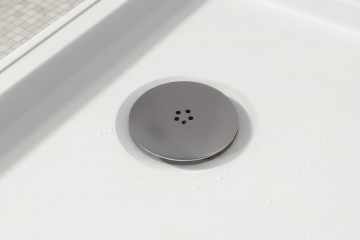
Learn about shower tray waste types, sizes, traps and flow rates, with practical advice on choosing a compatible replacement.
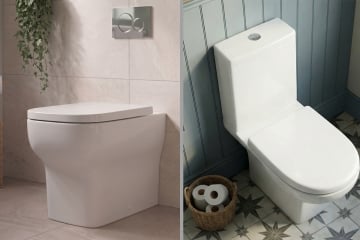
Learn how cable and pneumatic toilet flush buttons work, how to identify your mechanism and what to check before buying a replacement.
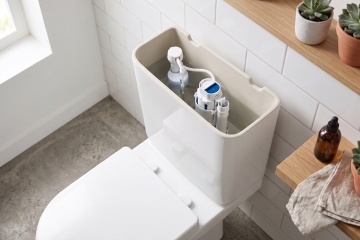
If your toilet will not flush properly, the cause is usually either inside the cistern, around the flush mechanism or further along the waste pipe. The key is to work out whether the flush is weak, not working at all, or backing up into the pan.

By signing up I agree to receive HeatandPlumb.com emails and to the privacy policy. I can also unsubscribe at any time