
0
£0.00
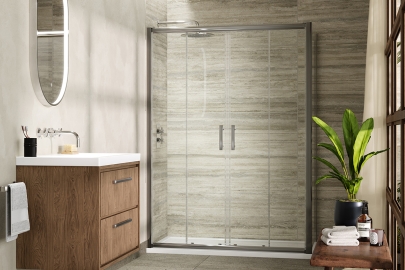
The difference between single and dual slide shower doors seems trivial until you're using them daily and discovering how door configuration affects access, cleaning, and water containment.
Both sliding mechanisms save space compared to hinged doors, but they function quite differently in ways that matter for practical bathroom use. Here's what actually separates them.
Single slide doors have one fixed glass panel and one sliding panel that moves along tracks. The fixed panel stays permanently in place whilst the sliding panel overlaps it when closed, creating a watertight seal through magnetic strips or overlapping edges.
You open the door by sliding one panel across the other, which means your entry width equals roughly half the total enclosure opening minus the overlap needed for sealing. A 1200mm wide enclosure provides maybe 500-550mm usable entry width with single slide configuration.
Dual slide doors have two panels that both move independently along separate tracks. Each panel can slide past the other in either direction, and you can open from either side depending on which panel you move. This provides more flexibility in access positioning.
The opening width with dual slides is similar to single slides - you're still working with roughly half the total width because one panel must remain in place for structural stability whilst the other moves. The advantage is choice about which side opens rather than increased width.
Neither configuration provides significantly more access width than the other - both deliver approximately half the total enclosure width as usable opening. The limitation is inherent to sliding mechanisms regardless of whether one or both panels move.
For genuinely wider access, you'd need bifold doors that collapse panels inward or hinged doors that swing completely clear. Sliding doors of any configuration sacrifice access width in exchange for the space-saving external profile.
However, dual slides let you position the opening wherever works best for your bathroom layout. Need access from the left today but right tomorrow? Dual slides accommodate both whilst single slides lock you into one predetermined entry side.
This flexibility matters in bathrooms where shower positioning relative to doors, toilets, or other fixtures makes one-side entry awkward. Being able to enter from either side eliminates the "wrong side" access problem.
Single slide doors install more simply because you're mounting one fixed panel permanently then adding one sliding panel to the track system. The fixed panel provides reference point for alignment whilst simplifying the installation sequence.
Track systems for single slides are slightly less complex with fewer moving components. You're only accommodating one sliding panel's rollers and guides rather than two independently moving panels.
Dual slide installations require more precise alignment because both panels need moving smoothly without binding against each other or the frame. The track system accommodates two sets of rollers, potentially doubling the adjustment points needing attention during fitting.
The complexity difference isn't dramatic - competent DIY installers handle either configuration successfully. However, single slides forgive minor installation errors more readily whilst dual slides demand greater precision for smooth operation.
Single slide doors have one fixed panel that's easily accessible for cleaning because it never moves. You can reach both sides comfortably, scrubbing away limescale and soap scum without fighting against door mechanics.
The sliding panel is slightly trickier because you're working around the overlap zone and track system. However, it's still reasonably accessible by sliding it fully to one side exposing previously hidden sections.
Dual slides complicate cleaning because both panels move, creating more potential positions and configurations. You need to slide panels in various positions accessing all surfaces, which takes slightly more effort and coordination.
Track systems show the biggest cleaning difference. Dual slides have more complex tracks accommodating two independent panels, creating additional crevices and channels where soap scum and hair accumulate. Single slide tracks are simpler with fewer problematic areas.
Realistically, the cleaning difference is marginal - maybe 5-10 extra minutes during deep cleaning sessions for dual slides. For weekly maintenance, the difference barely registers.
Single slide doors potentially seal more reliably because the overlap configuration creates a defined sealing zone where magnetic strips or seals engage consistently. The fixed panel provides stable reference point that doesn't shift.
However, quality dual slide doors seal perfectly adequately when properly installed and maintained. The dual magnetic strips or seals engage when both panels meet in the closed position, creating effective water barriers.
Water containment depends more on quality, installation precision, and seal condition than whether one or both panels move. Cheap single slides leak whilst quality dual slides stay watertight. Invest in decent components regardless of configuration.
Both types require similar maintenance attention to seals - inspect regularly, replace worn magnetic strips or rubber seals promptly, and ensure panels align properly when closed. Neglect either type and you'll get leaks.
Dual slide doors cost 15-25% more than equivalent single slide configurations because of the additional hardware required for two independently moving panels. More rollers, more complex track systems, and additional manufacturing complexity drive prices higher.
Budget single slide enclosures start around £150-200 for basic sizes, whilst equivalent dual slides begin around £180-250. Premium models of both types can exceed £400-600 depending on glass quality and finish.
The price difference narrows at the premium end where both configurations use quality materials and engineering. You're paying for thick glass and reliable mechanisms regardless of whether one or both panels slide.
For tight budgets, single slides deliver adequate functionality whilst saving money. For those willing to invest slightly more, dual slides provide the access flexibility without dramatically increasing costs.
Single slides work perfectly well in compact bathrooms where you've got clear preference for entry side based on toilet position, door location, or other fixtures. If you know exactly which side you'll always enter from, single slides deliver that access reliably.
Dual slides offer advantages when small bathroom layouts create cramped conditions where being able to enter from either side matters. Perhaps the toilet is positioned such that entering from the right is comfortable whilst left entry is awkward - dual slides let you choose.
Neither configuration saves external space better than the other since both are sliding mechanisms with identical footprints. The question is purely about access flexibility versus installation simplicity and cost.
Longevity depends far more on component quality than configuration type. Quality single slides last 10-15 years whilst cheap dual slides fail within 5-7 years. The number of moving panels matters less than roller quality, track durability, and seal condition.
Dual slides have marginally more components that can fail - twice the rollers, more complex tracks - but quality components in either configuration outlast budget alternatives of the opposite type.
Maintenance matters more than configuration. Clean tracks regularly, replace worn seals promptly, and lubricate rollers annually. Either type responds to good maintenance with extended reliable service.
Single slides create muscle memory - you automatically approach from the correct side and operate the same panel every time. This consistency feels natural after initial adjustment.
However, if you occasionally approach from the "wrong" side, you're reaching across your body or manoeuvring awkwardly to reach the sliding panel. This minor inconvenience occurs repeatedly if the bathroom layout doesn't naturally guide you to the correct approach side.
Dual slides eliminate wrong-side approaches completely. Regardless of how you enter the bathroom or which side of the enclosure you're nearest, you can open the door naturally without awkward reaching.
For single-user bathrooms, this flexibility matters less - you develop habits approaching consistently. For family bathrooms with multiple users of different heights and handedness, dual slides accommodate everyone's natural movement patterns without forcing adaptation.
Ready to explore actual options in both configurations? Browse our different shower door layouts through and view our different shower door configurations, covering both single and dual slide mechanisms.
At Heat and Plumb, we're realistic that single versus dual slide choice rarely makes or breaks bathroom functionality. Both work fine in appropriate situations, and we've seen satisfied customers with each configuration over 20+ years.
We stock both types because different bathrooms genuinely benefit from different configurations, and we offer free delivery across most of the UK to ensure you're not paying premium shipping regardless of which mechanism you choose.

Not without replacing the entire enclosure - the track systems, panel configurations, and hardware are completely different. You'd be removing everything and starting fresh with new components.
Both configurations make similar noise levels when operated - you're sliding glass panels along metal tracks either way. Quality rollers in good condition operate quietly whilst worn or cheap rollers create grinding or squealing sounds.
Marginally - you're maintaining twice the rollers and more complex tracks. This translates to perhaps 10-15 minutes additional annual maintenance time, not dramatically increased effort.
Neither configuration provides inherent advantages for elderly users. The sliding motion is identical regardless of how many panels move.
Yes, both are equally safe for children who understand basic operation. The sliding motion is straightforward and doesn't require significant strength.
Single slides work with curved or angled enclosures because the fixed panel can follow the curve whilst the sliding panel moves along a curved track.
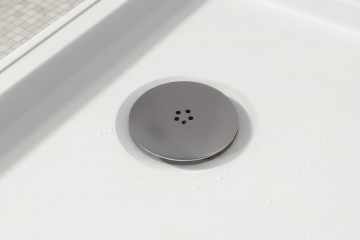
Learn about shower tray waste types, sizes, traps and flow rates, with practical advice on choosing a compatible replacement.
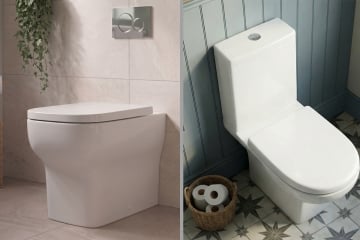
Learn how cable and pneumatic toilet flush buttons work, how to identify your mechanism and what to check before buying a replacement.
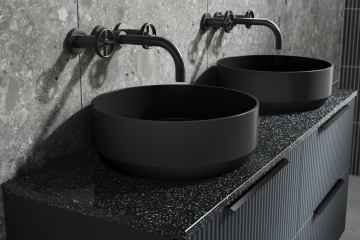
Selecting a basin for a vanity unit requires careful consideration of physical compatibility and plumbing clearances, not just aesthetic appeal. Ensuring the dimensions, mounting style, tap placement, and waste configuration align will prevent installation issues.

By signing up I agree to receive HeatandPlumb.com emails and to the privacy policy. I can also unsubscribe at any time