
0
£0.00

Wall-hung and floor-standing vanity units look stunning in design magazines - all that visible floor creating clean modern lines and spatial illusion. Then you actually install one and discover the reality involves serious wall strength requirements, hidden plumbing complications, and storage compromises nobody mentioned.
They're not universally superior to floor-standing units despite what Instagram suggests. Sometimes the traditional approach works better; sometimes floating genuinely transforms a space. The difference lies in understanding what you're actually gaining versus what you're sacrificing.
The floating effect extends the visible floor area, creating psychological space even when actual square footage remains identical. Your brain interprets the continuous floor as a larger room despite nothing physical changing.
This perceptual trick works brilliantly in genuinely small bathrooms where every visual device helping space feel less claustrophobic matters. The gap underneath doesn't need to be enormous; even 150mm clearance creates the floating impression whilst providing practical benefits.
Larger bathrooms gain less from this illusion because spaciousness isn't the primary concern. You're implementing a design feature that solves a problem you don't have, potentially creating new problems whilst delivering minimal benefit. The visual weight reduction matters most when combined with other space-expanding choices - large mirrors, light colours, minimal clutter. Floating vanities contribute to an overall strategy rather than magically transforming cramped bathrooms alone.
Here's where floating vanities separate from floor-standing dramatically: wall strength becomes absolutely critical rather than merely important.
Solid brick or blockwork walls handle floating vanities easily. The substantial construction supports the combined weight of vanity, basin, water, stored items, and someone leaning heavily whilst applying makeup or shaving.
Plasterboard walls over timber studs require substantial backing - either hitting multiple studs with long fixings, installing continuous backing boards spanning studs, or accepting that floating vanities aren't viable without major structural work.
Standard plasterboard cavity fixings absolutely will not work regardless of their weight ratings. The repeated stress of daily use, the leverage from someone leaning on the vanity edge, the vibration from closing drawers - all this gradually loosens inadequate fixings until catastrophic failure occurs. Professional installers assess wall construction before quoting floating vanity installation. For a full breakdown of wall types, fixings and load calculations, see our how to install a wall hung vanity unit guide.
Marketing materials emphasise easy floor cleaning underneath floating vanities. This advantage is real but often overstated relative to its importance in actual purchasing decisions.
Yes, you can mop straight underneath without navigating around cabinet bases. This saves perhaps thirty seconds during bathroom cleaning. Over a year that's maybe five minutes total time savings - hardly transformative.
The vanity itself still requires cleaning. Countertops accumulate the same mess, drawers need organising identically, basin cleaning is unchanged. You're saving fractional time on one aspect of bathroom maintenance whilst potentially complicating others. Floor-standing vanities with legs rather than solid plinths allow cleaning underneath whilst providing floor support. This compromise delivers most of the cleaning benefit without the structural complications or cost premium.
Floating vanities expose plumbing that floor-standing cabinets hide, creating aesthetic and practical implications rarely discussed honestly.
Some installations box in pipework behind the vanity, building false walls that conceal waste pipes and water supplies. This works visually but reduces the space-saving benefit you installed floating vanities to achieve.
Others embrace exposed plumbing, using attractive bottle traps and chrome supply pipes as deliberate design elements. This requires high-quality plumbing components and meticulous installation because everything shows permanently.
The middle ground involves keeping pipes within the vanity footprint whilst accepting some visibility. Waste pipes drop through the wall behind the cabinet, supply lines run inside cabinet sides - functional but not completely invisible.
Floor-standing vanities conceal plumbing completely inside cabinet spaces where aesthetics don't matter. Ugly plastic waste pipes, mis-matched copper supply lines, isolation valves - all hidden behind doors where nobody sees them.
Floating vanities sacrifice bottom storage space, starting higher off the floor to create the floating effect. This directly reduces total storage volume compared to floor-standing units of equivalent width and depth.
A floor-standing 900mm vanity might have 120 litres of internal storage. The floating equivalent has perhaps 80-90 litres, losing that bottom section completely. For bathrooms already struggling with storage, this 25-30% reduction matters enormously.
Vertical space inside floating vanities often organises awkwardly. The gap underneath means the vanity sits higher, potentially making top shelves less accessible whilst not providing usable space below. You're in an ergonomic middle ground optimising neither accessibility nor capacity.
Bathrooms with alternative storage - linen cupboards, medicine cabinets, extensive shelving - handle the reduced vanity storage without problems. Bathrooms relying entirely on vanity storage struggle when floating units can't accommodate everything.
Floating vanity installation runs £200-£400 typically versus £100-£200 for floor-standing equivalents. The premium reflects additional complexity, time, and potential wall reinforcement rather than just installer preference.
Wall preparation often requires backing boards, structural reinforcement, or mounting frames distributing weight across wall areas. This preparation takes hours before the vanity installation even begins. Plumbing becomes more complex when you can't hide mistakes inside cabinet bases. Everything must be precisely positioned and professionally finished because amateur work shows permanently. This demands higher skill levels commanding higher rates.
DIY installation of floating vanities is genuinely inadvisable unless you've got proper structural knowledge and experience. The risk of improper installation causing later failures outweighs any savings versus professional fitting.
Ready to change things up? Browse our range of modern storage for bathrooms, whether you're opting for floating, standing or something in between, and discover the Heat and Plumb difference.
The truth about floating vanities is they solve specific problems brilliantly whilst creating others. They're not universally superior; they're contextually appropriate. Small bathrooms with solid walls and alternative storage whilst pursuing contemporary aesthetics - floating works beautifully. Everything else requires honest assessment whether the aesthetic justifies the complications and costs. Most bathroom renovations involve sufficient complexities without adding optional challenges that look good in photos but complicate real life.

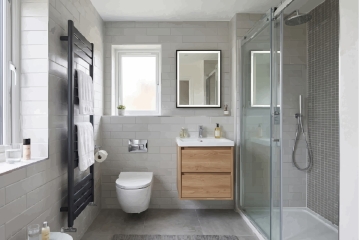
A small bathroom does not automatically require expensive fittings or extensive building work. Good planning makes a surprisingly compact room highly workable. Look honestly at what the space can actually take before choosing fittings, and you avoid costly mistakes later.
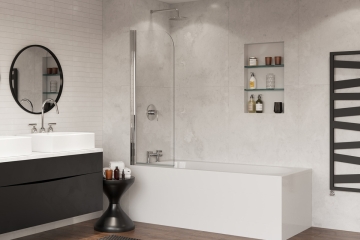
Bath screens collect water marks, soap residue and limescale quickly because they sit directly in the splash zone above the bath. Cleaning the glass, seals and moving parts regularly helps reduce staining, keeps the screen easier to maintain and lowers the chance of water escaping around worn or dirty seals.
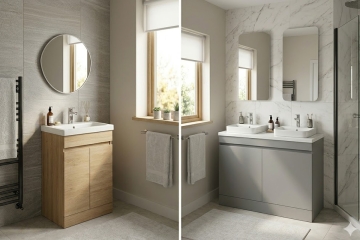
Double sink vanities devour space, cost considerably more, and often create problems they're supposed to solve. Single sinks aren't just budget compromises; in many bathrooms they're genuinely the smarter choice. Here's why the obvious answer isn't always right.

By signing up I agree to receive HeatandPlumb.com emails and to the privacy policy. I can also unsubscribe at any time