
0
£0.00
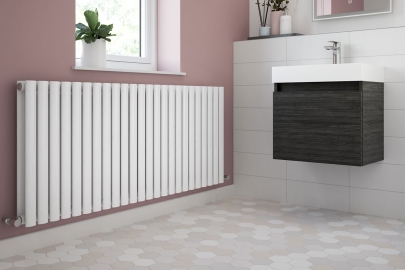
Whether you're opting for stylish heating panels for modern rooms or something more traditional, getting radiator sizing wrong leaves you either shivering through winter or wasting money heating rooms excessively with oversized units that cost more upfront and potentially run inefficiently.
Proper sizing isn't guesswork - it's straightforward maths based on your room's characteristics. Here's how to calculate what you actually need rather than hoping the standard size works adequately.
BTU (British Thermal Unit) measures heat output - specifically, the energy needed to raise one pound of water by one degree Fahrenheit. You don't need to understand the physics, just that higher BTU numbers mean more heat output.
Every room loses heat at a calculable rate based on its size, construction, and how many external walls it has. Your radiator needs to produce at least this much heat to maintain comfortable temperatures. Undersized radiators can't keep up regardless of how long they run or how high you turn the thermostat.
The basic calculation multiplies room volume (length × width × height in metres) by a factor that accounts for insulation quality. For a well-insulated modern room, multiply by 153. For poorly insulated older properties, use 180-200. This gives you a rough BTU requirement.
So a 4m × 3m room with 2.4m ceilings has a volume of 28.8 cubic metres. In a well-insulated modern house: 28.8 × 153 = 4,406 BTUs. That's your minimum radiator requirement before adjustments.
External walls lose heat far faster than internal walls because they're exposed to cold outside temperatures. Rooms with multiple external walls need significantly more heat than interior rooms of identical size.
Add 10-15% to your calculated BTU for each external wall beyond the first. A corner room with two external walls needs roughly 25% more heat than an identical interior room with no external exposure.
Windows are the weakest point in your home's thermal envelope, losing heat dramatically faster than insulated walls. Large windows or multiple windows substantially increase heat requirements.
Add roughly 100-200 BTU per window depending on size and glazing quality. A large bay window might require 300+ BTU additional allowance. Single glazing needs more allowance than double or triple glazing.
North-facing rooms receive no direct solar gain and stay colder throughout winter, requiring 10% additional heating capacity compared to south-facing rooms that benefit from winter sun warming them during daylight hours.
High ceilings increase room volume directly but also create stratification where warm air rises and collects uselessly near the ceiling rather than at living level. Rooms over 2.7m height need the additional volume factored into calculations.
Bedrooms need less heat than living spaces because you're using them primarily whilst under duvets. You can comfortably sleep at 16-18 degC whilst living rooms need 20-21 degC for comfort during evening relaxation.
Calculate bedroom BTU requirements then reduce by 10-15% from the standard calculation. This saves money on both radiator purchase and running costs without compromising comfort.
Bathrooms need higher temperatures despite small size because you're using them whilst wet and exposed after showering. Calculate standard BTU then add 20-30% to ensure the room heats adequately for comfort when you step out of the shower.
Hallways and landings often manage with lower temperatures as you're just passing through rather than spending extended time. However, cold hallways feel miserable when moving between warm rooms, so don't undersize drastically.
Once you know your BTU requirement, you need radiators that meet or slightly exceed this output. Radiator specifications always list BTU or watts output - use these figures for selection.
Don't just pick a radiator that physically fits your wall space and hope it's adequate. A radiator that fits perfectly but produces insufficient heat leaves you cold despite looking right. Start with heat requirements, then find radiators delivering that output within your available wall space.
If your calculated BTU is 4,500 and available wall space only accommodates radiators producing 3,500 BTU, you have several options: use two smaller radiators in different locations totalling adequate output, consider vertical radiators that produce more heat in less wall width, or accept the room will run slightly cooler than ideal.
Oversizing by 10-20% provides a comfortable margin ensuring the room heats adequately even during extremely cold weather. However, massively oversizing wastes money and can create overshoot where rooms get too warm before thermostatic valves react.
Different radiator designs produce varying heat outputs from identical physical dimensions. A Type 22 double panel convector radiator produces 50-75% more heat than a Type 10 single panel of the same width and height.
The type numbers indicate panel count and convector fins - Type 22 has two panels and two sets of fins, maximising heat output. Type 21 has two panels with one fin set. Type 11 has single panel with fins. Type 10 is basic single panel without fins.
For limited wall space, choosing Type 22 radiators delivers maximum heat from minimum width. For budget projects, Type 11 provides decent efficiency at lower cost than Type 22.
Designer radiators vary enormously in output relative to size. Some prioritise aesthetics over heat production, others deliver excellent output in unusual formats. Always check specified BTU output rather than assuming size indicates performance.
Column radiators generally produce less heat per square metre of wall space than modern panel radiators, though they suit period properties aesthetically. Factor this into sizing calculations.
Yes, and they're considerably more accurate than rough manual calculations because they account for numerous variables simultaneously. Most manufacturer websites and independent heating sites offer free calculators.
Input your room dimensions, number of external walls, window count and type, insulation quality, and desired temperature. The calculator processes these factors providing BTU recommendations specific to your situation.
Use multiple calculators and average the results for reliability - different calculators use slightly different algorithms that might produce varying recommendations. If three calculators suggest 4,200, 4,500, and 4,400 BTU, aim for radiators producing around 4,400 BTU.
The calculators aren't perfect but they're substantially better than guessing or assuming the radiator that was there previously was correctly sized (often it wasn't).
Undersized radiators run constantly without achieving comfortable temperatures, wasting energy through prolonged boiler operation whilst leaving you cold. The boiler works harder and longer trying to compensate for inadequate radiator output, increasing running costs.
You might assume the heating system is faulty when actually the radiators simply can't produce enough heat for the room's characteristics. No amount of bleeding, balancing, or thermostat adjustment fixes fundamentally inadequate radiator capacity.
Oversized radiators cost more initially but don't necessarily waste energy if you have thermostatic controls limiting output to required levels. However, massively oversized radiators can cause temperature control problems with short cycling where rooms heat too quickly and thermostats shut down repeatedly.
Moderate oversizing (10-20%) is fine and provides a comfortable margin. Extreme oversizing (50%+) wastes money on unnecessary radiator capacity you'll never use whilst potentially creating control issues.
At Heat and Plumb, we've helped countless customers through radiator sizing over 20+ years, and we know the most common mistake is buying based on what fits the wall space rather than what actually heats the room adequately. Our product specifications clearly list BTU outputs precisely because this matters far more than physical dimensions.
Plus, our free delivery across most of the UK means you can order exactly the right output radiators without compromise. We stock radiators ranging from compact low-output models for small spaces through to high-output units for large poorly-insulated rooms.
What sets us apart is having staff who'll actually discuss your room characteristics and help calculate appropriate sizing rather than just processing orders. We'd rather spend time helping you select correctly than deal with returns when undersized radiators don't heat properly. Sometimes that means recommending two smaller radiators instead of one large unit, or suggesting vertical designs to fit awkward spaces.

Only if your current radiators heat the room adequately and you're happy with the temperature. Many older installations used undersized radiators or rooms have changed use since original installation.
Generally yes, because older properties typically have poorer insulation, single glazing, draughty construction, and higher ceilings. All these factors increase heat loss requiring larger radiators to compensate.
Towel radiators prioritise towel hanging over heat output, so they produce less heat than standard radiators of similar size. A 1200mm tall towel rail might only produce 2,000-3,000 BTU.
If you're planning insulation upgrades soon (within 1-2 years), size radiators for the improved insulation levels. Oversized radiators with TRVs simply cycle less frequently once insulation improves.
Indirectly yes - if all radiators are significantly oversized, your boiler short-cycles (turns on and off frequently) which reduces efficiency and increases wear. Modulating boilers handle varying loads better than older on/off types.
Consider vertical radiators that produce equivalent heat in less width, use two smaller radiators on different walls totalling required output, or accept slightly lower temperatures in that room.
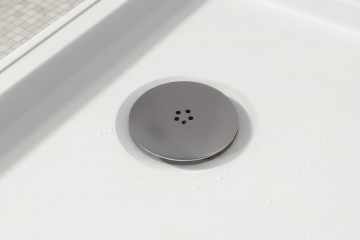
Learn about shower tray waste types, sizes, traps and flow rates, with practical advice on choosing a compatible replacement.
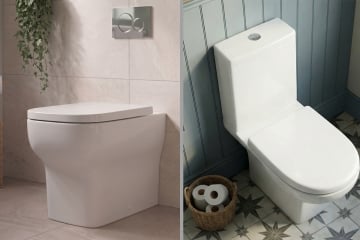
Learn how cable and pneumatic toilet flush buttons work, how to identify your mechanism and what to check before buying a replacement.
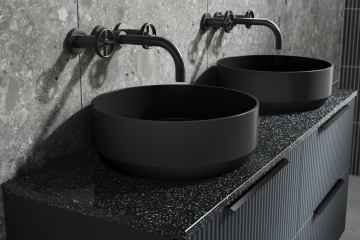
Selecting a basin for a vanity unit requires careful consideration of physical compatibility and plumbing clearances, not just aesthetic appeal. Ensuring the dimensions, mounting style, tap placement, and waste configuration align will prevent installation issues.

By signing up I agree to receive HeatandPlumb.com emails and to the privacy policy. I can also unsubscribe at any time