
0
£0.00
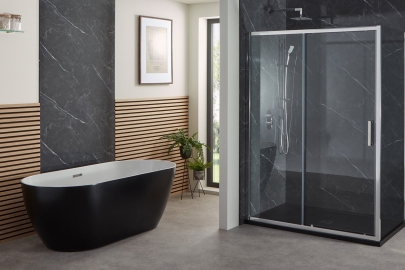
Shower door selection determines how you access your shower daily, how much space the bathroom loses to door swing, and whether you're fighting with mechanisms or enjoying smooth effortless operation.
The variety overwhelms people who just want a door that opens reliably whilst keeping water contained. Manufacturers don't help, creating overlapping terminology and presenting minor variations as distinct categories. Cut through the confusion: only a handful of genuinely different mechanisms exist, each with specific strengths and awkward limitations.
Pivot doors swing outward on hinges, exactly like regular doors throughout your home. The familiar operation feels intuitive immediately; nobody needs explaining how pivot doors work.
They provide the widest possible access - the entire door width becomes clear opening when fully open. Getting in and out involves no sideways manoeuvring or contorting through narrow gaps. This access width matters for anyone with mobility limitations or simply for comfortable daily use.
If the clearance is misjudged, the door will physically hit toilets, basins, or radiators. In tighter UK bathrooms, this is one of the most common reasons pivot doors end up being replaced after installation.
The swing requires clearance in front of your shower where the door travels. Measure carefully; a 760mm door needs roughly 900mm clearance accounting for the arc. Bathrooms with toilets, basins, or walls close to the shower enclosure often can't accommodate the sweep without doors hitting fixtures.
Water can drip from pivot doors as they swing outward, particularly if you open them immediately after showering whilst glass is saturated. The door carries water beyond the shower tray's footprint, potentially creating puddles on bathroom floors. Wait thirty seconds for water to drain before opening or accept occasional mopping.
Quality hinges matter enormously. Cheap pivot hardware develops play and sag within months, creating misalignment where doors won't close properly or seal effectively. Invest in substantial hinges from reputable manufacturers; this isn't the place for economising.
Sliding doors glide along tracks, staying within the shower's footprint entirely. The space efficiency suits bathrooms where pivot door swing is impossible due to nearby fixtures or limited floor area.
You're accepting reduced access width as a trade-off for the compact operation. Only half the opening width becomes available because one panel must remain stationary whilst the other slides. A 1200mm wide enclosure provides maybe 550mm access - adequate for most people but noticeably tighter than pivot alternatives.
In UK bathrooms with hard water, sliding track systems are also one of the most common long-term maintenance complaints we see, especially where limescale builds up in bottom runners.
Track systems require maintenance that pivot doors don't. The bottom channel accumulates hair, soap scum, and mineral deposits that restrict smooth sliding unless cleaned regularly. Small drainage holes in tracks clog frustratingly easily, causing water overflow onto floors.
Rollers eventually wear, creating grinding rough operation instead of smooth gliding. Quality sliding systems use robust rollers with sealed bearings lasting years; budget versions develop problems within months requiring replacement or tolerance of annoying operation.
The overlapping door configuration creates multiple potential leak points where panels meet. Magnetic strips or gaskets seal these overlaps, but they're inherently less watertight than pivot doors with continuous perimeter seals.
Bi-fold doors collapse inward on themselves, folding into two or three sections that stack compactly. This mechanism provides decent access width from limited door dimensions - an 800mm bi-fold might deliver 500mm clear opening when fully folded.
They're brilliant solutions for bathrooms where neither pivot swing nor adequate sliding door width works. The folding action stays within or minimally beyond the shower footprint whilst creating reasonable access.
However, bi-fold mechanisms involve numerous moving parts - multiple hinges, magnetic catches, guide rollers, and alignment systems. More components mean more potential failure points and higher maintenance requirements than simpler pivot or sliding systems.
Budget bi-fold doors are more likely to develop alignment issues over time, particularly in busy family bathrooms where they are used frequently.
The folded panels occupy shower interior space when open, protruding inward by 100-150mm. This matters in already-cramped small shower enclosures where that interior intrusion makes entry and exit awkward.
Hinged doors in corner entry configurations use two doors meeting at the centre, both swinging outward creating wide central access. This setup provides excellent entry width whilst distributing swing clearance across two smaller arcs rather than one large sweep.
The double door configuration suits square or near-square corner enclosures where single pivot doors would require excessive swing clearance. Each door needs less space individually than a full-width single door would demand.
Magnetic strips where doors meet create the central seal. This relies on precise alignment; if doors sag slightly or hinges develop play, the magnetic closure weakens and water escapes. Quality hinges become absolutely essential rather than merely important.
If alignment is slightly off during installation, the centre seal may not engage properly, which can lead to minor leaks between doors.”
Installation requires careful symmetry ensuring both doors align perfectly when closed. Amateur installation often creates mismatched doors where one sits slightly forward or higher, preventing proper magnetic seal engagement.
Frameless and framed describe construction rather than door mechanism. You can have frameless pivot doors, framed sliding doors, or any combination.
Frameless uses thick glass (8-10mm) with minimal metal hardware creating clean contemporary aesthetics. The absence of frames means easier cleaning with fewer crevices accumulating grime. However, frameless requires substantial hinges and secure wall fixings supporting the glass weight without frame assistance.
Framed surrounds glass with aluminium or plastic frames providing structural support, allowing thinner glass (4-6mm) and potentially costing less. The frames create a more traditional appearance whilst introducing numerous joints and channels requiring cleaning maintenance.
Neither is universally superior; they're aesthetic choices with practical implications. Frameless looks more modern whilst demanding higher installation standards and costs. Framed appears more conventional whilst being more forgiving during installation and potentially cheaper.
Start with bathroom layout rather than door preferences. Measure clearances around your shower identifying what's physically possible before considering what you'd prefer aesthetically.
Budget influences choice significantly. Pivot doors with quality hinges run £200-400. Sliding doors range £150-500 depending on quality and frameless versus framed construction. Bi-folds cost £300-600 for mechanisms that don't frustrate daily use.
Ready to upgrade your bathroom? Browse our collection of shower doors and give your bathroom the low-maintenance makeover it deserves.
But remember one fundamental truth: no door type suits every bathroom. Pivot doors are magnificent where space allows; sliding doors solve tight clearance problems; bi-folds handle truly awkward situations. Match mechanism to actual constraints rather than choosing based on abstract preference. Your bathroom's physical reality determines what works; everything else is optimisation within those boundaries.

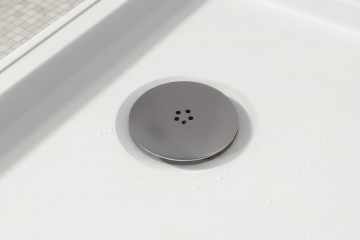
Learn about shower tray waste types, sizes, traps and flow rates, with practical advice on choosing a compatible replacement.
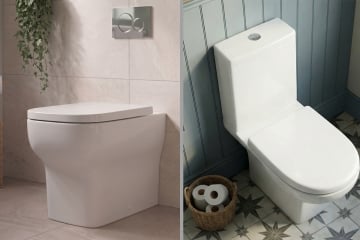
Learn how cable and pneumatic toilet flush buttons work, how to identify your mechanism and what to check before buying a replacement.
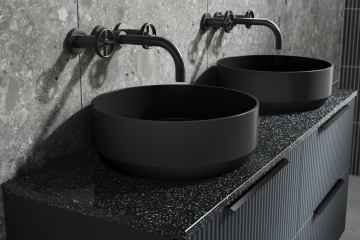
Selecting a basin for a vanity unit requires careful consideration of physical compatibility and plumbing clearances, not just aesthetic appeal. Ensuring the dimensions, mounting style, tap placement, and waste configuration align will prevent installation issues.

By signing up I agree to receive HeatandPlumb.com emails and to the privacy policy. I can also unsubscribe at any time