
0
£0.00
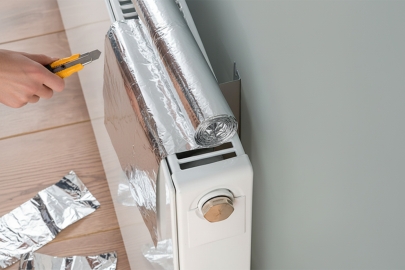
Radiator reflectors promise to boost your heating efficiency and reduce energy bills by reflecting heat back into the room instead of letting it escape through the wall. Sounds brilliant, but do they actually deliver?
The answer is more nuanced than the marketing suggests. They work in specific circumstances whilst being completely pointless in others, and understanding the difference saves you wasting money.
Radiator reflectors are thin sheets of reflective material - usually metallised plastic or foil-backed foam - that you position on the wall behind your radiator. The shiny surface is meant to reflect radiant heat back into the room rather than allowing it to pass through the wall and heat the outside world.
They target radiated heat specifically, which is heat transmitted through infrared radiation from the hot radiator surface. This represents only part of how radiators heat rooms - the majority comes from convection currents as warm air rises from the radiator and circulates. Reflectors do nothing for convective heat at all.
The effectiveness depends entirely on your wall construction and insulation quality. A reflector behind a radiator on a well-insulated cavity wall with 100mm+ insulation achieves essentially nothing. The same reflector on a solid uninsulated brick wall in a Victorian house makes a measurable difference.
Radiators on external walls in older properties without cavity wall insulation benefit most from reflectors because heat genuinely escapes through solid brick relatively easily. The wall behind the radiator becomes noticeably warm, indicating heat loss that a reflector can partially prevent.
Single-skin walls in extensions, conservatories, or older outbuildings lose heat rapidly and reflectors make meaningful improvements to comfort and efficiency. These thin walls offer minimal thermal resistance, so preventing heat passing through delivers noticeable benefits.
Radiators positioned on uninsulated walls adjacent to unheated spaces - garages, storage rooms, or external porches - also benefit because you're preventing heat escaping into cold areas rather than staying in your heated room.
Modern cavity walls with proper insulation already prevent heat escaping through walls effectively. Adding reflectors behind radiators on well-insulated walls achieves negligible improvement because there's minimal heat loss to prevent. You're solving a problem that doesn't actually exist.
Internal walls between heated rooms don't benefit from reflectors at all because any heat passing through the wall just heats an adjacent room rather than being lost. You're moving heat around your home rather than losing it externally, which isn't actually wasteful.
Radiators already positioned with adequate clearance from walls allow air circulation that carries most heat away through convection before radiation becomes relevant. Reflectors target radiated heat, but if most heat is leaving via rising air currents anyway, they're addressing a minority of the total heat output.
Claims of 10-20% energy savings through radiator reflectors are wildly optimistic marketing rather than realistic expectations for typical installations. Independent testing suggests savings closer to 3-5% under ideal conditions with uninsulated walls, dropping to essentially zero with modern insulation.
For a typical household spending £1000 annually on heating, even 5% savings only amounts to £50 yearly. Quality reflectors cost £30-50 for enough material to cover several radiators, so you're looking at barely one year payback period under best-case scenarios.
In poorly insulated period properties where they genuinely help, that £50 annual saving is real and worthwhile. In modern insulated homes, you're spending £50 on materials to save perhaps £10-15 annually, which takes years to break even and might never pay back meaningfully.
For real energy-saving heating tips, take a look at our linked article over on our blog.
Proper installation matters enormously for whatever minimal benefit reflectors provide. Simply sticking reflective material haphazardly behind radiators doesn't work effectively and can actually reduce efficiency by blocking air circulation.
The reflector needs to sit flat against the wall with the reflective surface facing the radiator, creating an air gap of at least 10-20mm between radiator and reflector. This gap is essential - if the reflector touches the radiator back, heat conducts directly through it rather than being reflected.
Measure carefully and cut precisely to fit behind your radiator without protruding visibly or crumpling into ineffective lumps. Poorly fitted reflectors look terrible and perform worse than no reflector at all.
Secure properly using appropriate fixings that won't damage your wall. Many reflectors come with adhesive backing, but this can fail over time, particularly in damp conditions, leaving you with reflector material gradually sliding down the wall behind your radiator.
If you're genuinely concerned about heat loss through walls, proper wall insulation delivers vastly superior results compared to reflectors. Cavity wall insulation or internal wall insulation actually addresses the problem comprehensively rather than applying a band-aid solution.
External wall insulation costs substantially more but transforms poorly insulated solid wall properties from energy-draining nightmares into comfortable efficient homes. The investment is significant - thousands rather than fifty quid - but the energy savings are genuinely transformative.
Even simple draught-proofing around windows, doors, and floors often saves more energy than radiator reflectors because eliminating draughts prevents heated air escaping directly whilst cold air infiltrates. You're addressing actual measurable heat loss rather than theoretical radiation through walls.
Shiny surfaces do reflect infrared radiation effectively - that part of the physics is sound. However, the proportion of radiator heat output transmitted through radiation versus convection means you're only addressing a fraction of the total energy.
Modern panel radiators emit roughly 20-30% of their heat through radiation, with 70-80% via convection currents. Even perfectly reflecting all radiated heat back (which doesn't happen in practice) only improves overall efficiency by addressing that minority radiation component.
Older cast iron radiators emit higher proportions through radiation - perhaps 40-50% - making reflectors marginally more effective with these vintage radiators. If you've got original Victorian radiators on uninsulated walls, reflectors make more sense than with modern convectors.
DIY reflector kits cost £10-20 for basic foil, £30-50 for purpose-made radiator reflector panels. Installation takes 30-60 minutes per radiator including measuring, cutting, and fitting. So you're investing perhaps £100-150 in materials and several hours of labour for a whole house.
In best-case scenarios with uninsulated external walls, you might save £50-100 annually across all radiators. That's maybe 1-2 year payback, which seems reasonable. In average modern homes, realistic savings drop to £20-30 yearly, stretching payback to 3-5 years.
Factor in that reflectors can deteriorate, adhesive can fail, and materials can discolour or degrade over time. That payback calculation assumes they remain effective for years, which isn't guaranteed with budget materials.
At Heat and Plumb, we've been around long enough to watch various energy-saving trends come and go, and we're honest about what actually works versus what's mostly clever marketing. We don't sell radiator reflectors because frankly there are better ways to spend your money on heating improvements, but we're happy to discuss what genuinely improves efficiency in your specific situation.
Our 20+ years online means we've seen customers try every efficiency gadget and gimmick available, and we've learned which interventions deliver real results. With over 30,000 heating products in stock, we focus on quality radiators, proper sizing, and smart controls that demonstrably reduce running costs rather than marginal solutions.
We'll recommend proper insulation, better radiator positioning, or upgrading to more efficient radiators before suggesting you stick foil behind existing ones. Sometimes the honest answer is that your money achieves more elsewhere, and we'd rather guide you toward effective improvements than sell you something that barely helps.
For bathroom heating that combines efficiency with functionality, explore our bathroom fixtures that add comfort and warmth designed for optimal heat distribution in moisture-prone environments.

Marginally, perhaps, but not enough to justify significant price premiums. Purpose-made reflector panels with foam backing and metallised surfaces perform slightly better than kitchen foil stuck to cardboard, but the difference is minimal given that both address only a small portion of heat loss.
Adhesive-backed reflectors can damage wallpaper or paint when removed, particularly if they've been in place for years. The adhesive bonds increasingly strongly over time, and removal often strips wallpaper or paint along with the reflector material.
Standard panel radiators allow relatively easy reflector installation because they're flat against walls with accessible space behind. Curved or ornate radiators make fitting reflectors extremely difficult and often impossible without custom cutting.
Thermographic images showing cooler walls behind reflectors look impressive but don't necessarily prove energy savings. A cooler wall means less heat escaping through it, which is good, but doesn't show whether that heat stayed in your room or just heated the radiator more instead.
Even if you believe reflectors help, prioritise rooms with radiators on external uninsulated walls. Internal walls, well-insulated cavity walls, and radiators on interior partition walls show negligible benefit from reflectors.
Radiator reflectors use metallised plastic or aluminium foil, both energy-intensive materials to produce. If they deliver negligible energy savings over their lifetime, the environmental cost of manufacturing them exceeds any carbon savings from marginally reduced heating use.
Learn about shower tray waste types, sizes, traps and flow rates, with practical advice on choosing a compatible replacement.
Learn how cable and pneumatic toilet flush buttons work, how to identify your mechanism and what to check before buying a replacement.
Selecting a basin for a vanity unit requires careful consideration of physical compatibility and plumbing clearances, not just aesthetic appeal. Ensuring the dimensions, mounting style, tap placement, and waste configuration align will prevent installation issues.

By signing up I agree to receive HeatandPlumb.com emails and to the privacy policy. I can also unsubscribe at any time