
0
£0.00
Shopping for a shower enclosure can feel a bit overwhelming when you start looking at all the options. Quadrant this, pivot that, walk-in something else.
But once you understand what each type actually does, it gets much easier to figure out what'll work in your bathroom. Here's what's out there.
These are the corner-dwelling, space-saving champions of the shower world: a quadrant enclosure fits into a corner with a curved door that slides along a track. The curved design means you get more elbow room inside than you'd expect from the footprint - it kind of pushes out into the bathroom rather than boxing you into a tight square.
Perfect for smaller bathrooms or ensuites where every centimetre counts, the sliding door doesn't swing out, so you don't need clearance space in front. The lifespan of shower enclosures is also pretty impressive, with high-quality models like ours lasting up to 30 years.
The downside? The curved glass and track system make them slightly pricier than basic rectangular options. And cleaning that curved door track can be a bit of a faff.
Same idea as a regular quadrant, but asymmetrical. Instead of a perfectly curved corner fit, one side's longer than the other. Maybe 1200mm x 800mm rather than 900mm x 900mm. This gives you more shower space where you've got room for it, while still fitting neatly into a corner.
Brilliant for bathrooms that aren't quite square, or where you want a bigger shower but can't extend it in all directions.
They're becoming increasingly popular, though your colour and style choices might be a bit more limited compared to standard sizes.
Straightforward rectangular enclosures with doors that slide back and forth rather than opening outward.
These work really well in tighter spaces - you don't need room for a door to swing open, so they're ideal if your bathroom's a bit cramped. The doors usually overlap in the middle when closed.
Installation's pretty simple. Two or three glass panels on a track, seal the edges, job done.
The tracks need regular cleaning to stop them getting gunky, and the sliding mechanism can wear out over time if you buy a cheap one. But get a decent quality enclosure and they last for years.
These have a door that swings open on a pivot - usually at one side, though some models pivot from the centre.
The pivot design gives you a nice wide opening to step through, which is handy if you're tall or just prefer not feeling like you're squeezing into a box. You do need space in front for the door to open, though, usually about 500-600mm clearance. If your bathroom layout doesn't allow for that, pivot doors won't work.
They're generally easier to clean than sliding doors because there's no track. Just smooth glass and simple hinges.
Clever space-saving design where the door folds in on itself like an accordion.
When you open it, the glass panels fold inward, taking up minimal space. You get a wider opening than a sliding door but don't need the clearance of a pivot door.
These are brilliant for ensuites or small bathrooms where you're really tight on space. The mechanism's a bit more complex than other options, which means more to potentially go wrong, but modern ones are pretty reliable. Cleaning can be a bit fiddly with all the folding sections and hinges, but that's the trade-off for the space efficiency.
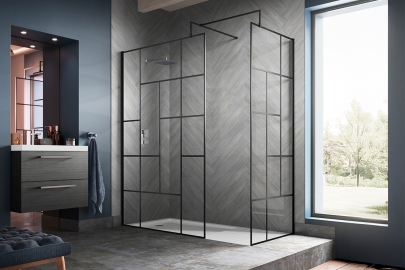
No door at all. Just a fixed glass panel (or two) that creates a wet room effect without actually having to waterproof your entire bathroom. They look absolutely stunning - really clean and minimal. There's something luxurious about just walking straight into your shower without opening anything.
You need decent space to pull this off properly. The open design means water can potentially spray out if your bathroom's tiny, though good design and shower positioning minimises this. They're easier to clean than any door-based design (no hinges, tracks, or seals to deal with), and they make small bathrooms feel bigger by removing visual barriers.
Traditional swing-out doors on hinges, like a normal door. Simple as that.
These give you a full, wide opening and they're the easiest to use - just pull and walk through. No sliding, no folding, no pivoting. But - they need the most clearance space. If you're opening a 900mm door outward, you need 900mm of clear floor space in front. Not happening in a compact ensuite.
The hinges are usually pretty robust, and there's less mechanical stuff to go wrong compared to sliding or bi-fold options. Clean lines, straightforward installation.
Looking to give your shower a refresh? We stock over 30,000 bathroom products including enclosures in every style and size, from budget-friendly options to premium frameless designs. Whether you need a compact quadrant for a small ensuite or a statement walk-in for a luxury bathroom, we've got you covered.
Free delivery to most of the UK means you're not paying extra transport costs on top of your enclosure price. And because we've been online for around 20 years, we've built relationships with suppliers that let us offer competitive pricing on well-known brands.
Our technical sales team can help you work out which enclosure type suits your specific bathroom layout and requirements. We're not just selling products - we understand how they actually fit and function in real bathrooms.
Ready to browse options? Check out our full suite of enclosure designs to see what might work for your bathroom.

Quadrant or bi-fold enclosures work best for small bathrooms because they maximise space efficiency. Quadrants fit neatly into corners with curved doors that don't need swing clearance. Bi-fold doors fold inward, so you don't need floor space for them to open. Avoid hinged or pivot doors in tight spaces - they need significant clearance.
Measure the width and depth of your shower area at multiple points - walls aren't always perfectly straight. Measure at the bottom, middle, and top, and use the smallest measurement. Check your ceiling height too, especially for taller enclosures. Account for any skirting boards, pipes, or obstacles. It's worth measuring three times to be certain.
Basic framed enclosures with straightforward designs are DIY-friendly if you're competent with tools. You'll need to drill into tiles carefully, ensure everything's level, and seal properly. Frameless enclosures are trickier because the heavy glass needs precise positioning and secure wall fixings. If you're not confident drilling into tiles or your walls are plasterboard, get a professional.
The thickness affects both durability and aesthetics. 8mm glass feels more solid, looks more premium, and is less prone to flexing or damage. It's typically used in frameless or semi-frameless designs. 6mm glass is lighter and cheaper, usually found in framed enclosures where the frame provides structural support. Both are safe and functional.
Proper sealing is crucial. Use quality bathroom-grade silicone sealant around all edges where the enclosure meets walls and tray. Make sure the door closes properly and any magnetic strips or seals are intact. Check the enclosure is installed level - if it's wonky, water won't drain correctly. Most leaks come from poor sealing rather than faulty enclosures.
Not if they're designed properly. You need adequate space - usually at least 1200mm depth - and the shower head should be positioned so water sprays towards the wall, not the open side. A slight slope on the floor towards the drain helps too. In very small bathrooms, walk-in designs can be problematic, but in properly sized spaces they work brilliantly.
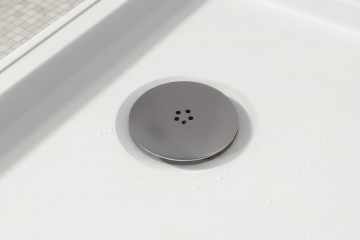
Learn about shower tray waste types, sizes, traps and flow rates, with practical advice on choosing a compatible replacement.
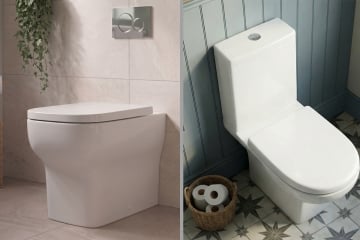
Learn how cable and pneumatic toilet flush buttons work, how to identify your mechanism and what to check before buying a replacement.
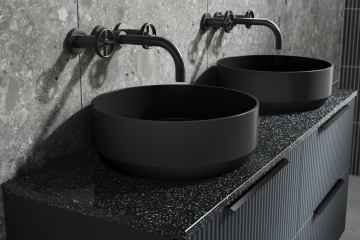
Selecting a basin for a vanity unit requires careful consideration of physical compatibility and plumbing clearances, not just aesthetic appeal. Ensuring the dimensions, mounting style, tap placement, and waste configuration align will prevent installation issues.

By signing up I agree to receive HeatandPlumb.com emails and to the privacy policy. I can also unsubscribe at any time