
0
£0.00
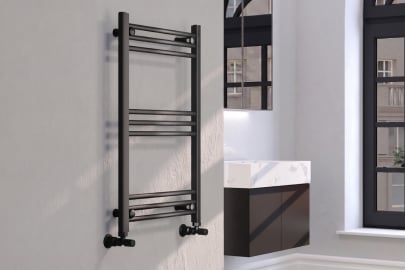
A heated towel rail can heat a bathroom if its output is suitable for the space, but not every model is designed to act as the primary heat source. To get this right, check the stated BTU output against the heat requirements of the room rather than buying purely on physical dimensions.
Heated towel rails can successfully warm a small or well-insulated bathroom, provided the BTU output matches the room's requirements. In larger spaces, loft conversions with high heat loss, or poorly insulated older properties, a standard towel rail often works best for drying towels while providing background heat. Certain bathrooms might still require a separate radiator, underfloor heating, or a higher-output towel rail to maintain a comfortable temperature during winter. The stated BTU output is the main figure to check when comparing how well different models may perform.
The heating performance of your towel rail depends on a combination of room conditions and product specifications:
BTU (British Thermal Unit) measures the amount of heat a product emits into a room. A towel rail with a low BTU rating might dry damp towels efficiently but will struggle to increase the ambient air temperature of the bathroom. Taller and wider traditional heated towel rails or high-capacity designer heated towel rails typically offer greater potential heat output, though checking the exact product specification is still important. Electric towel rails often list their output in watts instead of BTUs, requiring a simple conversion or wattage check against room requirements. Using a radiator BTU calculator or radiator size guide helps estimate the required output before committing to a purchase.
| Bathroom Type | Typical Situation | What the Towel Rail Needs to Do | Buying Advice |
|---|---|---|---|
| Small cloakroom or en-suite | Compact space with one small window | Act as the sole heat source | Check the output against a size guide; a standard model may be enough if the BTU output suits the space. |
| Standard family bathroom | Average size, moderate insulation | Heat the room and dry multiple towels | Choose a tall or high-BTU model to compensate for heat blocked by towels. |
| Large bathroom | High ceilings or large windows | Provide primary heat across a large volume | Consider a high-output model or pair a standard rail with underfloor heating. |
| Poorly insulated bathroom | Older property with solid walls | Overcome significant heat loss | Relying solely on a towel rail may not be enough; a high-BTU radiator may be better. |
| Bathroom with underfloor heating | Floor provides baseline warmth | Warm towels and add background heat | A standard or lower-output model may be enough if the underfloor heating already covers the main room heating. |
A heated towel rail is designed primarily to hold and dry towels while contributing heat to the room, whereas a standard radiator prioritises maximum heat emission. For larger spaces where ambient warmth is the main goal, a standard bathroom radiator is often the better choice. Our Column Radiators Buying Guide covers this in more depth. However, in typical UK bathrooms, a towel rail is usually the more practical option.
| Feature | Heated Towel Rail | Standard Bathroom Radiator |
|---|---|---|
| Primary Function | Towel warming and storage | Maximum room heating |
| Heat Output (Size for Size) | Generally lower | Often higher, depending on style and size |
| Towel Capacity | High | Poor (often requires a separate rail attachment) |
| Space Efficiency | Uses vertical space well | Often uses wider horizontal space |
Standard central heating towel rails connect directly to the home's wet central heating system, heating up alongside the rest of the house. Electric towel rails operate independently, requiring a connection to the mains supply, which can be useful for en-suites, flats or rooms where separate control is wanted. Dual fuel towel rails offer flexibility by combining both methods, allowing connection to the central heating during winter and independent electric operation in summer. Setting up a dual fuel system requires compatible radiator valves and the right towel rail electric elements to work correctly. If unsure about the suitability of an electric vs central heating towel rail for a specific room, consult a qualified installer.
Yes, towels can reduce how much heat reaches the room. A thick, damp towel draped over the bars absorbs the energy to dry the fabric, preventing that same energy from warming the surrounding air. A fully loaded towel rail, particularly in a busy family home, will dry towels efficiently but release less heat directly into the room itself. The physical design of the rail, such as bar spacing and grouping, also affects natural convection and airflow. Buyers focusing purely on maximum towel capacity should account for this drop in effective room heating when checking BTU requirements.
Match the required heat output with your available wall space. Taller and wider models, including large radiator towel rails, usually provide greater surface area and a higher BTU or wattage rating. A compact under-stairs cloakroom requires far less output than a large bathroom featuring high ceilings and multiple external walls. Check the height, width, projection into the room, pipe centres, and valve positions before ordering. Pipe centres are especially important when replacing an existing rail, as matching the current plumbing helps avoid unnecessary pipework changes.
Check the BTU output or wattage rating against your room's actual requirements before making a purchase. Think practically about whether the rail will primarily serve to heat the room, warm daily towels, or both. Take into account your bathroom size, the level of insulation, and how many towels will cover the bars on a daily basis. Use a radiator size guide or BTU calculator to estimate the output needed, and consult a professional installer if changing the heating type, pipework layout, or electrical connections.

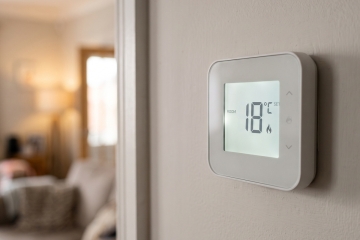
What temperature should your home be? Find out how a cold house may affect your health, who is most at risk and when to put the heating on.
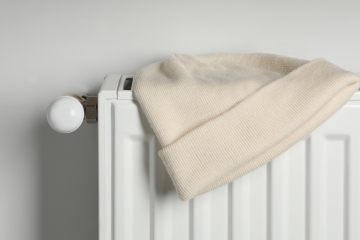
The amount of energy your home needs will depend on the property, the heating system, how well the house holds heat and how often each room is being used. A heating schedule that works for one household might be completely wrong for another.
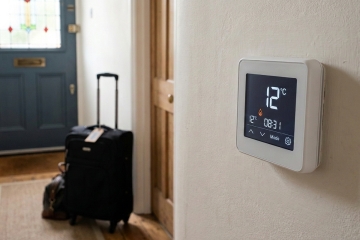
If you're going away during colder weather, leave the heating system powered and turn the thermostat down rather than switching the boiler off completely.

By signing up I agree to receive HeatandPlumb.com emails and to the privacy policy. I can also unsubscribe at any time