
0
£0.00
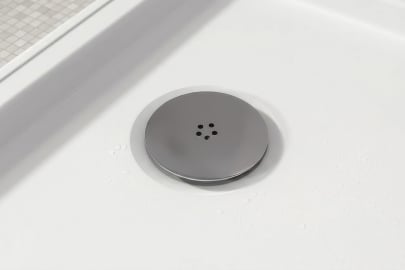
A shower tray waste looks like a plain round cover in the bottom of the tray, but what sits underneath varies a lot from one product to the next. Opening size, depth below the tray, outlet direction and flow rating all differ. A replacement that doesn't suit the tray or the space beneath it will either fail to fit or drain badly.
This guide covers what the waste, trap and outlet pipe each do, how the main designs compare, which measurements matter and what to check before you order. It also looks at slow drainage and whether a waste can be changed without lifting the tray.
The waste is the fitting set into the hole at the bottom of the tray. From above you see a cover, round or square, sitting in a flange that seals against the tray. Below the tray, a trap and an outlet pipe carry the water away towards the drain.
Each part has its own job. The waste fitting (the flange and body that clamp to the tray) makes the watertight connection and lets water through. The trap is a bend or chamber that holds a small amount of standing water, known as the water seal, which stops smells from the drainage system coming back up into the bathroom. The outlet pipe is the waste pipe that leaves the trap and joins the household drainage. Plenty of products combine the waste and trap in a single assembly, so the join between them isn't always visible, but the jobs stay the same.
Three different measurements get muddled here. The waste size, such as 90mm, normally refers to the opening in the tray that the fitting passes through. The cover you can see is wider than that, often 110mm or more across on a waste for a 90mm opening. The outlet connection is the third measurement, and it varies too. Many gravity wastes use a 1½ inch connection designed for 40mm waste pipework, joined through the appropriate fitting. Pumped wastes can use smaller 15mm or 22mm push-fit connections that feed a compatible shower waste pump, which then moves the water on towards the drain. Each figure describes a different part, so one can't stand in for another, and the manufacturer's specification is the place to confirm how a particular waste connects.
Wastes are described in several overlapping ways, so one product can fit more than one row below. A waste can be fast-flow and low-profile at the same time, and a pumped waste is shallow by design. Treat the labels as features to check rather than separate categories.
| Type or design | What it means | What to check before choosing |
|---|---|---|
| Standard gravity waste | A trap and flange that drain by gravity. Most are made for a 90mm tray opening, though 50mm versions exist too. | Opening size, the tray thickness range it suits, depth required below the tray, outlet size |
| Fast-flow | Designed to drain faster than a basic waste, with the manufacturer quoting a litres-per-minute rating. | How the rating was measured, whether the waste pipe has enough fall, plus the usual fit measurements |
| Low-profile or shallow | Reduced depth below the tray, for low floors or tight clearance. | The exact depth required under the tray, the tray thickness range, and the flow rating, which varies between models whatever the depth |
| Pumped waste | A shallow waste with a small-bore push-fit outlet (15mm or 22mm in the AKW range) that feeds a shower waste pump. The pump is bought separately. | Pump compatibility, outlet size, which trays the waste is listed for |
| Adjustable or angled outlet | Traps with a swivelling outlet, or supplied with an angled bend, so the pipe can leave in a different direction. | Whether the adjustment covers the angle your pipework requires, and the clearance for the bend |
| Floor-level and wet room wastes | Made for floor formers and tiled or vinyl floors rather than a standard tray. These follow their own fitting rules, covered in our wet room buying guide. | Floor finish, former compatibility, outlet position |
None of these is the best choice for every shower. The right one depends on the tray, the drainage layout, the space underneath and what the tray manufacturer specifies. A fast-flow waste that doesn't suit the tray is no use, however good its rating.
Start with the tray. The manufacturer's instructions or product page will usually give the waste size, and some also list specific compatible wastes. If you still have the paperwork or know the tray's model name, that settles most of the question.
If you're replacing an existing waste, check it for a model name or manufacturer's markings first. Where the tray opening can be exposed safely, measure across the hole in the tray itself, in millimetres, not the cover or the waste flange. A 90mm opening is the most common size on UK trays, but 50mm openings exist as well, so check rather than assume. A 50mm opening can't take a 90mm waste, and a 90mm opening won't suit a 50mm one. If you can't get at the opening, work from the tray specification or identify the existing waste before ordering. Measuring the visible cover will overstate the size, because the cover and flange are wider than the opening.
The headline diameter is only part of the picture. Two 90mm wastes can still differ in ways that decide whether one fits. Tray thickness at the opening is one. A single manufacturer lists its standard 90mm trap for trays up to 17mm thick and its shallow version for trays up to 23mm, with longer flanges available for thicker ones. Depth below the tray is another. The same maker's standard trap is listed at 82mm under the tray and the shallow one at 70mm. Those figures belong to specific products, which is the point: read the specification for the exact waste you're buying, and don't assume a 90mm waste fits every 90mm opening.
If neither the tray nor the waste can be identified, record what you can: the opening size where it can be measured, the tray thickness at the edge of the hole, the clear space beneath the tray, and the size and direction of the outlet pipe. Photos of the old waste, and of the underside of the tray if you can get at it, help when you're comparing against product specifications.
In everyday use the two words overlap, and product listings add to the muddle. A product called a shower waste may include the trap. One called a shower trap often comes with the flange and cover. A kit sold as a shower tray waste might be a combined unit. The labels tend to reflect how the product is sold rather than a firm dividing line.
Strictly, the waste is the outlet fitting in the tray and the trap is the water-sealed bend beneath it. Shallow shower traps commonly hold a 50mm water seal, and that depth is part of why they still ask for a certain amount of space under the tray.
When you're replacing only part of the setup, compatibility matters at every joint. A new cover and flange has to suit the body it clamps into. A new trap has to match the tray opening, the tray thickness and the outlet pipe size. Check too whether the new waste already includes its own trap, since a second trap in series on the same outlet can cause drainage problems.
Work through these before ordering. When you're ready to compare products, our range of shower tray wastes lists sizes, finishes and outlet types in one place.
Hair and soap residue are the usual culprits, and the waste is the first place to look. Both collect in the cover, the cup or filter insert and the trap itself. On many wastes the cover and cup lift out from above, and the manufacturer's instructions describe how. Nuie's instructions for its 90mm waste, for example, tell owners to remove the flange and trap assembly, clean every part and rinse the trap body with clean water, and they point out that regular cleaning is what keeps the waste draining at its rated speed.
If the waste is clean and the tray still holds water, the cause may be further along. A partial blockage in the pipework could be restricting the flow. So could a waste pipe with too little fall, which the same instructions warn can seriously reduce flow. If other fixtures on the same pipe are slow too, the problem is probably beyond the tray. A recently fitted tray is worth checking against the waste pipe advice in our shower tray fitting guide.
This is why a fast-flow waste won't automatically fix a slow tray. The waste is only one part of the route the water takes, and a higher rating won't clear a blockage or add fall to a pipe. A change of waste helps mainly where the waste itself is the limiting part, as it can be with a high-output shower.
For first steps, clear what you can see, clean the removable parts and run the shower to check whether the water clears. Strong chemical drain cleaners are best avoided unless the manufacturer says they're suitable, as they can attack finishes and seals. If cleaning makes no difference, a plumber can check the pipework.
Sometimes. It depends on which part you're replacing and how the tray is installed, and the job falls into three levels.
Cleaning or servicing is the easiest and can be done from above. You lift out the cover, cup or filter and clean the parts. Replacing a removable component, such as a worn cover or cup, is also possible from above where the manufacturer supplies it as a separate part. Covers and cups are made for specific wastes, though, so the match matters.
Replacing the complete waste or trap assembly is a different job. On many designs the body clamps to the tray from below and connects to the outlet pipe, so it takes access beneath the tray. That could be a removable side panel, an access hatch, the ceiling of the room below or lifted floor boards. Low-profile trays that sit flat to the floor often have their pipework under the floor, which makes access harder still. A few wastes are designed to be swapped from above, but that's a feature of the specific design, and the instructions will say whether yours is one of them.
Before buying parts, read the manufacturer's instructions for your waste or tray and look at how the tray is installed.

Learn how cable and pneumatic toilet flush buttons work, how to identify your mechanism and what to check before buying a replacement.
Selecting a basin for a vanity unit requires careful consideration of physical compatibility and plumbing clearances, not just aesthetic appeal. Ensuring the dimensions, mounting style, tap placement, and waste configuration align will prevent installation issues.
A common reason buyers hesitate over steel baths is the fear that the water will go cold quickly, or that the surface will chip if something is dropped on it. In practice, modern enamelled steel behaves differently from acrylic and has some useful advantages, particularly where rigidity and durability matter.

By signing up I agree to receive HeatandPlumb.com emails and to the privacy policy. I can also unsubscribe at any time