
0
£0.00
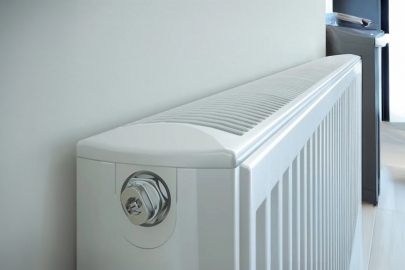
Your heating's on, but some rooms are tropical while others feel like winter? The culprit is most likely unbalanced radiators.
It's one of those problems that seems mysterious until someone explains what's actually happening - then it's dead simple to fix. Well, simple-ish - it does take a bit of patience. Let's take a closer look.
Your boiler pumps hot water around your heating system, and like water flowing down any network of pipes, it takes the path of least resistance. This means it flows more easily to some radiators than others depending on factors like pipe length, diameter changes, number of bends in the pipework, and how far each radiator sits from the boiler itself.
Without balancing, radiators closest to the boiler get loads of hot water flowing through them rapidly whilst ones further away get the dregs after everything else has taken its share. The result is uneven heating throughout your home, with some rooms reaching temperature quickly whilst others never quite get properly warm no matter how long the heating runs.
Balancing means adjusting each radiator's flow rate individually so they all get their fair share of hot water. You're essentially telling the system "slow down here, allow more through there" until everything heats evenly and rooms reach comfortable temperatures at roughly the same time.
You don't need much specialist equipment for this job. A radiator bleed key, an adjustable spanner or lockshield valve key, and ideally a digital thermometer make up the essential kit, though you can manage without the thermometer if necessary.
Some people use proper pipe thermometers that clip onto the radiator pipes for accurate temperature readings, but honestly, a cheap infrared thermometer from Amazon works perfectly fine for this purpose. Or you can even just use your hand if you're doing this casually and don't need laboratory precision.
A notepad proves useful for keeping track of which radiators you've adjusted and by how much. Once you're twiddling valves on six or eight different radiators across multiple rooms, it becomes surprisingly easy to forget what you've done where, and having notes prevents you from going round in circles.
Make absolutely sure your radiators are bled properly first, because air trapped in the system throws everything off and you'll be chasing your tail trying to balance things when the real problem is air pockets preventing proper water circulation.
Check that your pump is on the correct speed setting too. Most modern pumps have three speed settings, and medium is usually right for domestic systems. If your pump's running too slow or too fast, balancing won't help much because the fundamental flow rate is wrong.
Give your heating a good long run first - turn everything up to maximum, let it run for 20-30 minutes, and observe which radiators get hot quickly and which ones lag behind. This tells you what needs attention and gives you a baseline understanding of how your system currently behaves before you start making adjustments.
Each radiator has two valves controlling it. One is the thermostatic valve (or manual valve on older systems) that you turn to control the temperature setting in that room. The other is the lockshield valve, usually hidden under a plastic cap on the opposite end, and this is what you'll be adjusting for balancing purposes.
The lockshield valve controls how much water can flow through that specific radiator, essentially restricting or allowing flow to ensure each radiator gets an appropriate share of the total system capacity.
Remove the plastic cap and you'll see a spindle underneath - either square-shaped or slotted depending on the valve design. This is what you'll turn with your spanner or valve key to adjust the flow rate.
Right, here's how to actually tackle this job properly from start to finish.
First, turn off all your radiators by closing the lockshield valves completely. Turn them clockwise until they stop - you're basically shutting down every radiator in the house temporarily. Don't touch the thermostatic valves during this process; leave those fully open.
Now open all the lockshield valves by turning them anticlockwise, and count the turns as you open each one so you know how many times you've turned it. Most valves need somewhere between one and four full turns to open completely, though this varies by manufacturer.
Turn your heating on and let the system come up to temperature, then find the radiator that gets hot first - this becomes your "index radiator," which is usually the one closest to your boiler or wherever your heating circuit begins.
Open the lockshield on this index radiator fully and leave it that way. This stays fully open as your baseline reference point, and everything else gets adjusted relative to this one radiator that's allowed unrestricted flow.
For the second radiator (the next one that got hot after your index radiator), close its lockshield valve until it's almost completely shut, then open it approximately half a turn to start with.
Wait 10-15 minutes for the system to stabilise after each adjustment before taking any measurements or making further changes. Heating systems don't respond instantly, and you need to give the water flow patterns time to settle into their new configuration.
Check the temperature of the pipes going into and coming out of the radiator - the flow pipe bringing hot water in and the return pipe taking cooler water back. The temperature difference between these two pipes should be around 11-12 degC, which indicates the radiator is extracting heat efficiently without either rushing water through too fast or restricting it too much.
If the temperature difference is too large (say 15 degC or more), the water's moving too slowly through the radiator, so open the lockshield valve slightly more. If the difference is too small (less than 10 degC), the water's rushing through too quickly without transferring enough heat, so close the valve a bit.
Work methodically through each radiator in the house doing the same process. It's genuinely tedious and takes longer than you'd expect, but you're fine-tuning the entire system's hydraulic balance, which requires this patient, systematic approach.
Don't have a thermometer and don't want to buy one? You can still achieve decent results using a manual approach that's been used for decades.
Feel both pipes at the bottom of each radiator with your hands. The pipe on the TRV or manual valve side is the flow bringing hot water in, whilst the lockshield side is the return taking cooler water back out.
The return pipe should feel noticeably cooler than the flow pipe, but not cold or barely warm. If both pipes feel equally scorching hot, there's too much flow, so close the lockshield valve slightly. If the return is barely warm whilst the flow is hot, there's not enough flow restriction, so open the lockshield more.
It's less precise than using actual temperature readings and won't give you that perfect 11-12 degC differential, but it works reasonably well. Your grandad probably balanced radiators this way for decades without any digital equipment, and heating systems worked fine.
It depends on how many radiators you've got and how patient you are with the adjustment process.
For a typical three-bedroom house with maybe eight radiators scattered across two floors, you're looking at a couple of hours minimum. Maybe more if things are really out of whack initially and you need multiple rounds of adjustments to get everything dialled in properly.
You genuinely can't rush this job. Each time you adjust a valve, the system needs time to respond and settle before you can assess whether that adjustment was correct or needs further tweaking. People who try to rush through it end up making things worse and having to start over.
If you've balanced everything carefully and rooms are still heating unevenly despite your best efforts, you might have bigger underlying issues that balancing can't solve. Sludge buildup restricting flow, a failing pump that's not circulating water properly, or poorly designed pipework with fundamental flow problems could all be culprits.
Strange noises from radiators or pipework, radiators that won't heat at all no matter what you do with the valves, or leaks developing around valve connections - these all warrant getting a heating engineer involved rather than continuing to fiddle with things yourself.
Once you've got everything balanced nicely, make a note of exactly how many turns each lockshield valve is open from its fully closed position. If you ever need to remove a radiator for decorating or if you have to drain the system for maintenance, you'll want to set all the valves back to precisely these same positions afterwards.
Otherwise the system stays balanced indefinitely unless something changes - new radiators get added, pipework gets modified, or valves get accidentally adjusted during other work.
And if you're thinking about upgrades while you're sorting the heating, have a look at our practical upgrades for drying and heating needs for bathroom heating improvements.
At Heat and Plumb, we've been helping people upgrade their heating systems for over 20 years. And more importantly, we understand that sometimes the problem isn't the radiators themselves, but how the whole system works together. That's why we stock more than 30,000 heating and plumbing products, including everything you need for heating maintenance and upgrades. From replacement valves through to complete radiator replacements, we've got every area covered.
Plus, we offer free delivery to most of the UK - so you're not paying extra when you need to order multiple components or replacement radiators. We've built strong relationships with suppliers over two decades, which lets us offer competitive pricing on quality brands rather than just cheap imports that'll cause problems down the line.
What really sets us apart is having knowledgeable staff who understand heating systems properly, not just people reading product descriptions. So if you're having trouble getting your system balanced or you're not sure whether your radiators are adequate for your rooms, we can actually talk you through the technical aspects and help you work out what's needed.

You typically only need to balance radiators once unless something in your heating system changes significantly. If you add new radiators, modify pipework, replace your boiler, or notice uneven heating developing over time, that's when rebalancing becomes necessary. Otherwise, a properly balanced system stays that way for years without needing adjustment. Annual maintenance like bleeding radiators doesn't affect the balance.
Yes, you need the heating running to balance radiators properly because you're assessing how water flows through the system when it's operating normally. Turn the heating on, let it reach operating temperature, then make your adjustments whilst monitoring how quickly different radiators heat up and what temperature differentials you're getting between flow and return pipes. You can't balance a cold system effectively.
The flow pipe bringing hot water into the radiator typically sits around 70-80 degC when your system's running at normal operating temperature. The return pipe taking water back should be roughly 11-12 degC cooler, so around 58-68 degC. This temperature drop indicates the radiator is extracting heat efficiently. If the difference is much larger or smaller, you need to adjust the lockshield valve to change the flow rate.
If one radiator stays cold whilst others heat properly, it's usually either completely closed at the lockshield valve, full of air that needs bleeding, or suffering from sludge buildup blocking water flow internally. Check the lockshield valve is actually open, bleed the radiator thoroughly, and if it's still cold, you might need a heating engineer to power flush it or investigate whether the radiator itself has failed internally.
Bleeding radiators releases trapped air but doesn't change the fundamental hydraulic balance of your system, so you shouldn't need to rebalance just from bleeding. However, if your radiators were very airlocked before bleeding, the system might behave differently once air is removed and proper water circulation resumes. Run the heating and see how everything performs - if rooms heat evenly, you're fine. If not, rebalancing might help.
Yes, unbalanced radiators can increase your heating costs because the boiler runs longer trying to heat rooms that aren't getting adequate water flow. Radiators furthest from the boiler struggle to reach temperature, so the system keeps running when properly balanced radiators would have achieved comfortable temperatures much faster. Balancing improves overall system efficiency and can reduce how long your boiler needs to fire up each day.
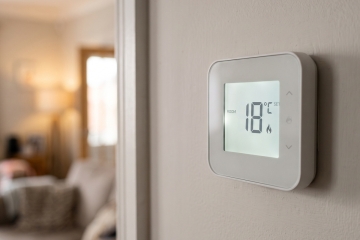
What temperature should your home be? Find out how a cold house may affect your health, who is most at risk and when to put the heating on.
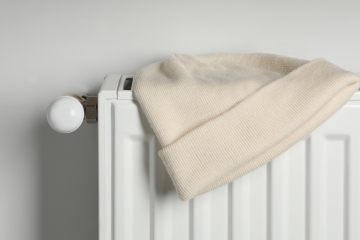
The amount of energy your home needs will depend on the property, the heating system, how well the house holds heat and how often each room is being used. A heating schedule that works for one household might be completely wrong for another.
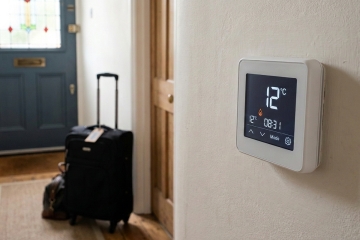
If you're going away during colder weather, leave the heating system powered and turn the thermostat down rather than switching the boiler off completely.

By signing up I agree to receive HeatandPlumb.com emails and to the privacy policy. I can also unsubscribe at any time