
0
£0.00
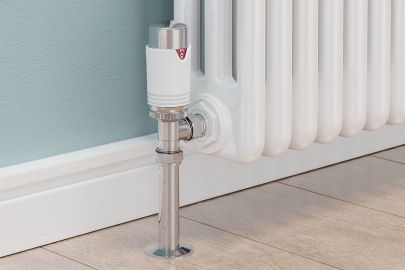
Most people have TRVs fitted on their radiators and haven't got a clue how they actually work or what those numbers mean. They'll twist the dial up when they're cold, down when they're warm, and wonder why their heating bills are so high despite constantly adjusting things.
Understanding how TRVs actually function can save you a fair chunk of money on heating bills whilst making your home more comfortable. They're cleverer than they look, and once you know what you're doing with them, they pretty much run themselves.
A Thermostatic Radiator Valve sits on your radiator and automatically controls how much hot water flows through based on the temperature in that specific room. It's a self-regulating device that responds to ambient air temperature without needing any external power source or electronic controls.
Turn it to your desired setting, and the valve opens or closes automatically to maintain that temperature. When the room gets too warm, it closes down to reduce heat output. When the room cools off, it opens back up to allow more hot water through and increase heating.
No manual fiddling needed once you've set it. The valve does all the work automatically using a temperature-sensitive element inside that expands and contracts in response to the surrounding air temperature.
Inside the TRV head sits a capsule filled with either wax or liquid that expands and contracts dramatically with temperature changes, providing the mechanical force needed to operate the valve. When the room warms up, this material expands and pushes a pin downward that closes the valve, progressively reducing water flow to the radiator until it's producing less heat. As the room temperature drops, the material contracts, the pin retracts upward, and more hot water flows through the radiator to compensate.
It's completely mechanical - no batteries required, no electronics to fail, no programming to set up or forget about. Just straightforward physics doing its thing reliably year after year, which is why TRVs have remained essentially unchanged for decades despite all the smart home technology that's emerged.
Most TRVs have numbers from 0 to 5 marked on the head, sometimes with additional markers or symbols between the main numbers, and understanding what these actually represent helps you set them appropriately.
These aren't direct temperature readings in degrees Celsius or Fahrenheit. They're roughly correlated to temperature ranges:
The exact temperatures these settings produce vary between manufacturers and depend significantly on your room's characteristics like size, insulation quality, and how much sun it receives. These are ballpark figures rather than precise guarantees, so you'll need to experiment slightly to find what works for your specific rooms.
TRVs should go on every radiator throughout your home except for one specific radiator - usually the one in the room where your main wall thermostat is located.
You need at least one radiator without a TRV so your boiler doesn't get confused and think the entire house has reached temperature when actually it's just one room that's closed off. This radiator without a TRV is called the "bypass radiator" and ensures water can always circulate through your system properly.
Don't position TRVs behind curtains, furniture, or anything else that blocks air circulation around the valve head. They need to sense the actual room temperature, not the temperature of trapped air behind your sofa or in the pocket of warm air between your curtain and the wall, both of which will give false readings and cause the TRV to behave incorrectly.
The main advantage is genuine room-by-room temperature control that lets you tailor heating to how you actually use different spaces in your home.
Your bedroom might be perfectly comfortable at 16 degC for sleeping, while your living room wants to sit at 20 degC for evening relaxation. Bathrooms often benefit from slightly warmer temperatures around 22 degC, whilst spare rooms that nobody uses for weeks at a time can run much cooler to avoid wasting energy heating empty space.
They save energy and reduce heating bills by preventing you from heating empty rooms or spaces to full temperature when lower temperatures would be perfectly adequate. Studies consistently suggest that TRVs can reduce heating bills by 10-20% when used properly throughout a home, which represents genuine savings that accumulate significantly over a heating season.
Beyond the financial benefits, they improve comfort by preventing rooms from overheating when conditions change - like when afternoon sun streams through your south-facing windows, or when you've got the oven running and cooking is adding heat to your kitchen.
TRVs don't heat rooms faster if you whack them up to setting 5 instead of setting 3. They simply set a higher target temperature that the room will eventually reach. The radiator heats at exactly the same rate regardless of the TRV setting - turning it higher just means it stays on longer.
They also don't need constant adjustment throughout the day unless your needs genuinely change. Set them appropriately for each room and leave them alone. That's literally the point of having automatic temperature control - the valve adjusts itself in response to changing conditions without you touching it.
Turning a TRV to 0 when you leave a room doesn't necessarily save energy if you're going to turn it back up an hour later. The room then needs reheating from cold, which often uses more energy than simply maintaining a lower temperature. It's more efficient to reduce the setting slightly rather than turning radiators off completely for short periods.
TRVs and BTU ratings work together but control completely different aspects of your heating system, and understanding the distinction helps you get the best performance from your radiators.
BTU (British Thermal Unit) measures how much heat your radiator can actually produce - it's the raw heating capacity of the metal panel when hot water flows through it. A radiator rated at 4000 BTUs can transfer that much heat into your room per hour when operating at full capacity. Understanding BTU ratings is essential for ensuring your radiators are properly sized for each room's heat loss.
TRVs don't change your radiator's BTU capacity - they can't make a small radiator produce more heat than it's physically capable of generating. What they do is regulate how much of that available capacity gets used at any given time. Think of BTU as the size of your car's engine, and the TRV as the accelerator pedal controlling how much power you're actually using.
If your radiator's BTU rating is too low for your room's requirements, turning the TRV to maximum won't solve the problem because the radiator simply can't produce enough heat. You'd need a larger radiator with higher BTU output. Conversely, if your radiator's oversized for the room, the TRV becomes very useful for preventing overheating by restricting flow and reducing the heat output to comfortable levels.
This is why it's worth calculating your room's BTU requirements first when choosing radiators, then using TRVs to fine-tune the actual temperature in each space based on how you use it.
Your main wall thermostat controls when your boiler fires up and starts circulating hot water through the system. TRVs control individual radiators once the system is running and hot water is available.
They work together as complementary controls rather than competing with each other. The thermostat says "the house needs heating, fire up the boiler," then TRVs in each room regulate how much heat those specific spaces receive from the available hot water circulating through the system.
You still need a good quality main thermostat positioned properly in a representative room. TRVs aren't a replacement for your main system control - they're an enhancement that provides room-by-room refinement of the heat distribution.
Fitting new TRVs isn't particularly difficult if you're comfortable with basic DIY and plumbing. You need to drain the affected radiator, remove the old valve body, fit the new valve, refill the radiator, and check for leaks.
Most TRVs use standard valve connections, so swapping like-for-like is straightforward without any pipe modifications needed. Going from an old manual valve to a TRV might require different pipework depending on your existing setup and whether you've got the right valve tail already fitted.
If you're not confident working with plumbing and the potential for leaks, getting a plumber in makes sense. They can swap all your valves throughout the house in just a few hours, and you'll have peace of mind that everything's fitted correctly without leaks.
TRVs are remarkably low-maintenance devices that typically work reliably for years without needing attention. The main issue that develops is them getting stuck if they're left in one position for extended periods without movement.
During summer when your heating's off for months, occasionally turn all your TRVs through their full range from one end to the other and back. This prevents the pins inside from seizing up, which can happen if they sit stationary for half a year and then suddenly you try to use them again in autumn.
If a TRV stops working properly - maybe it's stuck open or closed and not responding to temperature changes - you can usually replace just the head without touching the valve body or draining any radiators. This saves considerable hassle compared to replacing the entire valve assembly.
If your whole heating system is poorly designed with undersized radiators, an inadequate boiler, or terrible insulation throughout the property, TRVs won't fix these fundamental problems. They can only control the heat that's actually available - they can't magic up more heat if your radiators are too small or your boiler is struggling.
They also don't work particularly well in single-room properties or completely open-plan spaces where there aren't distinct rooms with doors. If your entire home is basically one big room, a single good quality thermostat positioned sensibly makes more sense than TRVs that are all sensing the same air temperature anyway.
Modern smart TRVs can integrate with systems like Google Home, Amazon Alexa, or Apple HomeKit, letting you control heating through voice commands or automation routines. You can set complex schedules, use geofencing so heating adjusts automatically when you leave or return home, and track your energy consumption through detailed apps.
Whether that's worth the considerably higher cost compared to traditional TRVs depends entirely on how much you value automation and remote control. Traditional TRVs work perfectly fine if you don't mind setting them manually and letting them regulate temperatures automatically from there.
At Heat and Plumb, we've spent over 20 years supplying heating components to homeowners and trade customers who need reliable products that actually work properly. We stock more than 30,000 products including TRVs in various styles from basic manual versions through to smart options with all the latest connectivity features.
What makes us different is having technical sales staff who understand heating systems comprehensively, not just individual components in isolation. If you're unsure which TRV type suits your needs, or you want advice on whether your current radiators will work efficiently with TRVs, we can actually talk you through the technical considerations properly rather than just processing your order.
Ready to dive in? Check out our contemporary options for bathroom heating that offer both warmth and functionality.

For most living areas like lounges and dining rooms, setting 3 gives you comfortable temperatures around 18-20 degC that suit general activity and relaxation. Bedrooms usually work well at setting 2 or 2.5 (around 16-18 degC) for comfortable sleeping without being stuffy. Bathrooms might want setting 4 (around 21-23 degC) for warmth when you're wet from the shower. These are starting points - adjust based on personal preference and how your specific TRVs behave in your rooms.
You should fit TRVs on all radiators except one, which should be left with a manual valve or no valve restriction at all. This bypass radiator is typically in the same room as your main wall thermostat. Having at least one radiator without a TRV prevents situations where all the TRVs close simultaneously and stop water circulation, which can cause problems with your boiler and pump expecting flow through the system.
If your room stays cold despite the TRV being set to maximum (setting 5), the problem isn't the TRV itself but inadequate heat output from the radiator. Either the radiator is too small for the room's heat loss, it needs bleeding to remove trapped air, it's suffering from sludge buildup reducing efficiency, or your entire heating system isn't producing enough heat. The TRV can only control available heat - it can't create more if the radiator is undersized.
Quality TRVs typically last 10-15 years or longer with minimal maintenance, though cheaper models might fail sooner. The main wear point is the internal mechanism that can seize up if left unused for long periods. The valve body often outlasts multiple TRV heads, and you can replace just the head (the bit you turn) without touching the valve body or draining radiators, which makes replacement straightforward when needed.
Traditional manual TRVs don't need any power source - they're completely mechanical devices using wax or liquid expansion to operate. Smart TRVs with digital displays, programming, and wireless connectivity do require batteries, typically AA or AAA depending on the model. Battery life varies from a few months to over a year depending on the specific smart TRV and how frequently it operates.
TRVs should ideally be fitted horizontally pointing into the room so they sense room air temperature accurately. Fitting them vertically (pointing up or down) or tucked away horizontally along the pipe can cause them to sense pipe temperature or trapped air temperature rather than actual room temperature, leading to incorrect operation. If your radiator valve position makes proper mounting difficult, you might need angled TRVs or remote sensor versions designed for awkward installations.
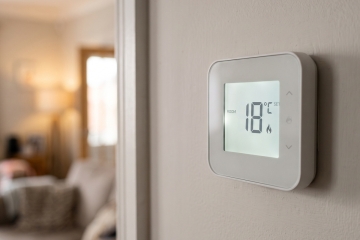
What temperature should your home be? Find out how a cold house may affect your health, who is most at risk and when to put the heating on.
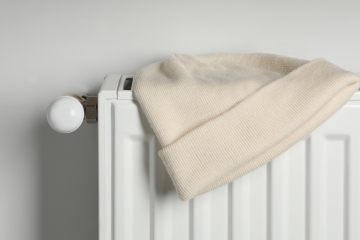
The amount of energy your home needs will depend on the property, the heating system, how well the house holds heat and how often each room is being used. A heating schedule that works for one household might be completely wrong for another.
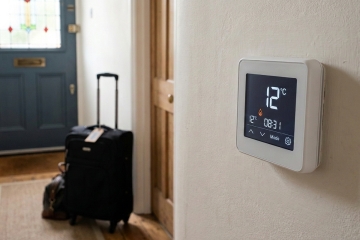
If you're going away during colder weather, leave the heating system powered and turn the thermostat down rather than switching the boiler off completely.

By signing up I agree to receive HeatandPlumb.com emails and to the privacy policy. I can also unsubscribe at any time