
0
£0.00
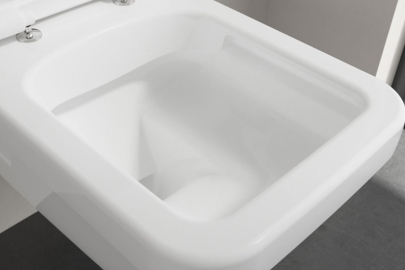
Upgrading to a rimless toilet eliminates hidden limescale and extends ceramic glaze lifespan by removing the need for abrasive bleach. Modern direct-flush mechanisms solve early splashing issues through horizontal water projection. However, retrofitting these pans to high-pressure concealed cisterns mandates a flow restrictor to perfectly calibrate flush volume.
A rimless toilet removes the traditional internal overhang inside the pan, leaving a smooth, continuous bowl surface. Instead of gravity dropping water from under a hidden ceramic lip, it uses a targeted direct flush system to wash the entire bowl - which also eliminates the main hiding place for limescale and bacteria.
Modern rimless models use direct flush technology to project water horizontally around the circumference of the pan before letting it drop. This direct flush mechanism creates a powerful vortex that cleans the entire surface area efficiently. The targeted flow requires a perfectly calibrated dual flush valve to ensure full coverage.
Modern rimless pans do not splash, provided the flush volume matches the pan design. Early rimless models suffered from water overshooting the bowl due to unrefined water pathways. Today's direct flush technology propels water horizontally around the pan first, effectively solving this issue.
Not every rimless installation needs additional components - modern concealed cisterns designed for direct flush pans are usually pre-calibrated. However, retrofitting a rimless pan to an older, high-pressure cistern often requires installing a flow restrictor to manage water delivery speed and prevent overshooting.
The targeted flow requires a precisely matched flush volume. Too little and the bowl won't clear; too much and the water overshoots the rim - which is why pressure checks matter before installation, not after.
Rimless systems outperform traditional box rims in hygiene, maintenance speed, and flush efficiency. The structural differences dictate specific requirements for cistern compatibility and installation.
| Feature | Traditional Box Rim | Rimless Direct Flush |
|---|---|---|
| Limescale Risk | High (hidden under ceramic lip) | Zero (fully exposed bowl) |
| Cleaning Time | Slower (requires curved brushes) | Instant (simple wipe clean) |
| Flush Volume | Standard gravity drop | Highly calibrated requirement |
| Water Trajectory | Vertical drop | Horizontal vortex then drop |
Eliminating the traditional box rim means abrasive bleach and curved toilet brushes are no longer required to fight hidden limescale. Avoiding these harsh chemicals directly extends the lifespan of the ceramic glaze. Maintenance is reduced to a quick wipe-down using mild cleaning solutions.

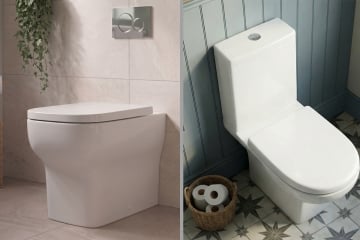
Learn how cable and pneumatic toilet flush buttons work, how to identify your mechanism and what to check before buying a replacement.
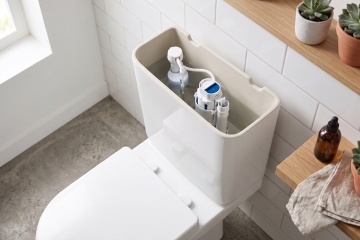
If your toilet will not flush properly, the cause is usually either inside the cistern, around the flush mechanism or further along the waste pipe. The key is to work out whether the flush is weak, not working at all, or backing up into the pan.

A weak shower is often caused by a mismatched shower head, built-up limescale, restrictive pipework, a poorly specified water system or an incompatible pump. Pinpointing the root of the problem saves money and helps avoid buying replacement hardware that was never going to solve the underlying issue.

By signing up I agree to receive HeatandPlumb.com emails and to the privacy policy. I can also unsubscribe at any time